Africa, ECOWAS failing to develop bankable climate projects for carbon financing – Ricketts Hagan
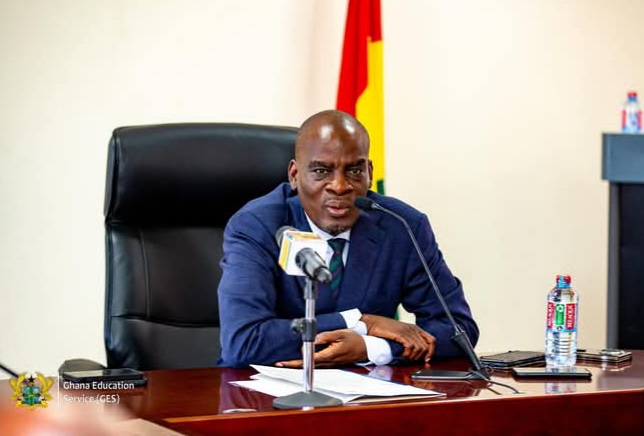
Former investment banker and Leader of Ghana’s delegation to the Community Parliament, George Kweku Ricketts Hagan, has expressed concern that Africa and the West African sub-regional bloc have been unable to develop bankable climate-friendly project proposals to access carbon financing.
Speaking in an interview, Mr Hagan urged African financial institutions and international development financing bodies to collaborate with ECOWAS member states and African governments to help investors develop bankable climate-friendly projects that can attract funding.
According to him, despite suffering greatly from global climate issues, the continent has not been able to take advantage of available financing opportunities.
Mr Hagan explained that under the Paris Climate Agreement, wealthy nations responsible for causing climate change agreed with smaller countries to establish a financing mechanism to remove carbon dioxide from the atmosphere—a process known as greenhouse gas removal or emissions reduction, which has come to be known as carbon financing.
“These funds have conditions we need to meet to attract that finance. It means we have to put together projects seen as bankable, meeting the criteria that will make it easy for the release of these funds,” he said.
“So we need these African financial institutions to work together with African governments, cooperation partners, and investors to build the expertise and capacity to develop these bankable climate-friendly projects.”
The former investment banker noted that beyond accessing funds to execute projects, properly prepared climate projects can also generate carbon credits—a tradable commodity that represents real money.
“One carbon credit is equivalent to one tonne of greenhouse emissions. If you can prove that you have taken one tonne of carbon dioxide from the atmosphere through a climate-friendly project, you can, through compliance, be able to get it,” he explained.
He added that institutions worldwide have developed and traded on carbon markets, buying carbon credits for their own compliance purposes.
“This is one area where we are not actually doing well as a sub-region and continent. Yes, we have become victims of climate change, but there is now a provision to get some remedy from these carbon issues.”
When asked about those who suspect Western countries are deliberately making it difficult for African member states to access financing, Mr Hagan referenced discussions at a recent seminar where African development banks and financial institutions reported being unable to use funds attracted from the West.
“The excuse is that whatever you put together as a bankable project does not satisfy those giving us the funds,” he said. “As a former investment banker, I will actually not accept that argument. We need to build the expertise.”
He pointed to countries in Asia and elsewhere, including China, that are successfully using carbon-related financing for projects.
“Why is it that on the continent and sub-region, these monies made available to us we have not been able to use? Is it because our preparation of these projects is poor and could be as a result of not having the kind of expertise?”
Mr Hagan suggested that countries providing the funds should help build expertise to meet the requirements for accessing them.
“It’s unacceptable that we will attract this financing, make empty announcements about them, publish in papers that we have attracted billions of funds for climate-friendly projects, yet when the money hits our accounts we are not able to use it because our hands are tied,” he said.
He emphasised the need to build capacity to utilise these funds to benefit from reducing carbon dioxide and greenhouse gas emissions and addressing climate challenges.
“It requires money. If you do not have money, you cannot save certain situations. We have to attract these funds if they are available,” he stated.
Mr Hagan urged African nations to move past blaming industrialised nations for pollution.
“We cannot continue to blame the industrialised world for polluting. We are looking at the way forward. We can say they have polluted more than we have—that is no longer an argument. We have to move on and survive.”
He stressed the need to utilise available resources so they do not become “like a hoax, as if these resources do not exist.”
“Looking inwardly, we need to build our capacity and expertise so that we do not have to bring people from outside to build bankable climate-friendly projects for us, but rather have the expertise ourselves—with government cooperation and investors in member countries—to make these projects a reality.”