COP31: Africa is not here to beg but to demand fulfilment of commitments – Zanetor Agyeman-Rawlings
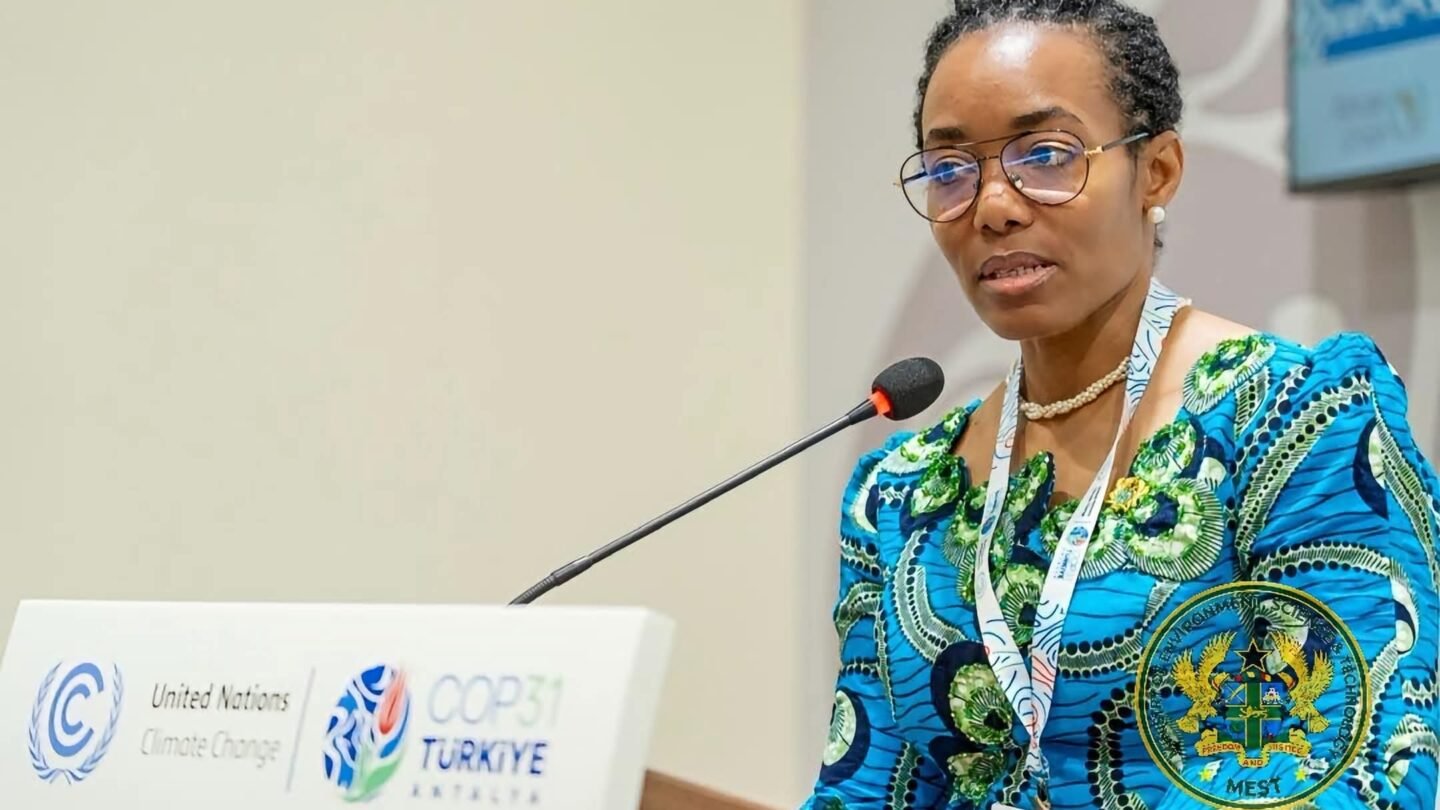
Ghana’s Minister for Environment, Science and Technology, Dr Zanetor Agyeman-Rawlings, has called on African countries to present a united front in demanding climate justice, equitable access to climate finance and fair economic returns from the exploitation of the continent’s critical mineral resources.
She said Africa must move beyond appeals for support and insist that commitments made by the international community are translated into tangible benefits for the continent.
Speaking at the Africa Day Ministerial Segment of the 31st United Nations Climate Change Conference (COP31) in Antalya, Türkiye, Dr Agyeman-Rawlings declared: “Africa is not here to beg; it is here to demand that commitments be honoured.”
She emphasised the need for a coordinated African position in international climate negotiations, particularly on financing adaptation programmes, protecting natural resources and securing fair terms of trade for minerals increasingly needed for the global transition to clean energy.
The Minister highlighted several priorities requiring urgent attention, including the tripling of adaptation finance by 2035, the restoration of degraded ecosystems and the provision of early warning systems for every African country to strengthen preparedness against climate-related disasters.
She also identified water security as fundamental to Africa’s survival, economic development and climate resilience, stressing that climate action and the transition to cleaner energy must not come at the expense of African communities.
On critical minerals, Dr Agyeman-Rawlings underscored the importance of ensuring that Africa derives greater economic value from its natural resources rather than remaining primarily an exporter of raw materials.
She called for fairer arrangements that support value addition, industrial development and environmental protection, particularly as demand for minerals used in batteries, electric vehicles, wind turbines and solar panels continues to grow.
The Africa Day Ministerial Segment formed part of COP31’s engagements on Africa’s climate priorities, with particular attention to water security, climate resilience, early action and accessible climate finance.
The discussions also align with the African Union’s 2026 focus on water and sanitation and its efforts to strengthen the continent’s collective climate agenda ahead of COP32, scheduled to take place in Addis Ababa, Ethiopia, in 2027.
Dr Agyeman-Rawlings maintained that while the world depends on Africa’s mineral resources to advance its clean-energy ambitions, the continent must also receive the necessary support and fulfilment of international commitments to protect its environment and build resilient communities.