2027 Budget: Government allocates GH¢389bn for spending, GH¢30bn for New Economy programme
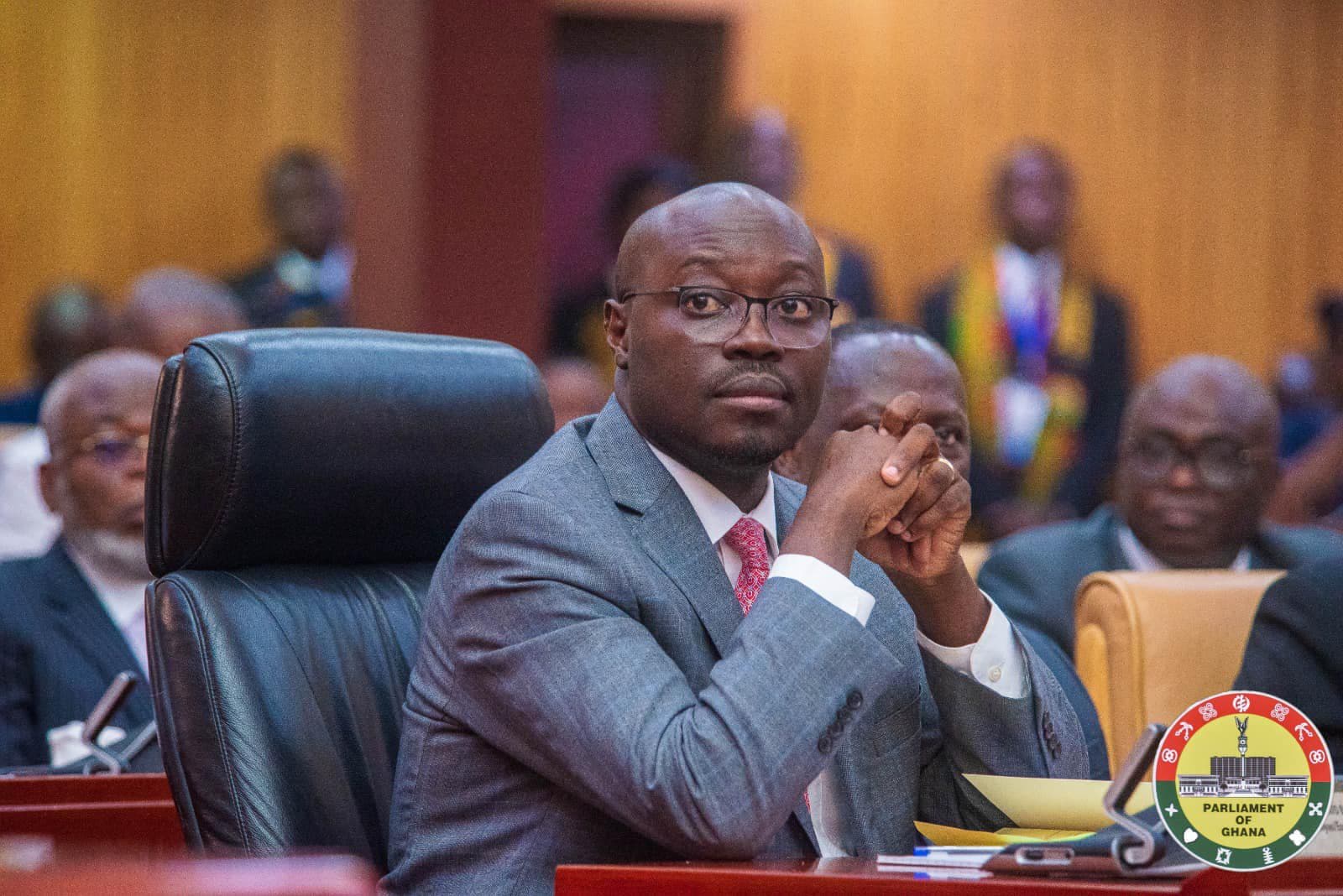
Finance Minister Dr Cassiel Ato Forson has presented a GH¢389.2 billion spending plan for 2027, announcing that the government will introduce no new taxes while committing GH¢30 billion to the first year of its four-year New Economy Programme.
The 2027 Budget Statement, presented to Parliament on Thursday, November 12, outlines the government’s revenue and expenditure plans, debt repayment commitments, infrastructure investments and economic targets for the coming year.
A major highlight is the government’s plan to spend the equivalent of US$10 billion between 2027 and 2030 on the New Economy Programme, which is intended to transform Ghana’s productive sectors, create jobs and reduce dependence on imports.
Dr Forson also announced the early redemption of GH¢29 billion in Domestic Debt Exchange Programme (DDEP) bonds due in February 2027, alongside plans to settle a US$590 million Eurobond obligation ahead of its January 2, 2027 maturity date.
Dr Forson assured Parliament that the 2027 Budget would not introduce any new taxes.
“This 2027 Budget will not introduce any new tax,” he told the House.
As part of measures to support the government’s 24-Hour Economy agenda, import duties and VAT on solar panels and batteries will be removed. The Finance Minister encouraged households, farmers and electric vehicle owners to consider solar energy as an alternative power source.
The government will also undertake reviews of the Income Tax Act, Revenue Administration Act, stamp duty administration and the Communications Service Tax framework during 2027.
In the small-scale gold sector, the government plans to introduce a three per cent discount on gold purchased from small-scale producers in 2027 following consultations with industry players.
Dr Forson said the cost of building Ghana’s gold reserves through the gold purchase programme had declined from 16 per cent in 2025 to five per cent in 2026. The proposed discount is intended to reduce that cost further to two per cent.
The government’s total revenue and grants for 2027 are projected at GH¢323.4 billion, representing 17.9 per cent of Gross Domestic Product (GDP).
Non-oil tax revenue is expected to contribute GH¢256.1 billion, while oil revenue is projected at GH¢15.5 billion.
Total expenditure, however, is estimated at GH¢389.2 billion, equivalent to 21.6 per cent of GDP.
Of the projected expenditure, GH¢92.6 billion will go towards wages and salaries, while interest payments are expected to reach GH¢61 billion.
The interest bill comprises GH¢51.5 billion on domestic debt and GH¢9.5 billion on external debt.
Capital expenditure is projected at GH¢100.4 billion, representing 5.6 per cent of GDP, although another section of the Budget Statement gives a figure of GH¢98.3 billion. When projects funded through transfers to other public institutions are included, capital spending rises to GH¢120.5 billion.
The government has also allocated GH¢13.9 billion towards arrears clearance, including GH¢4.3 billion owed to Independent Power Producers.
The cash deficit is projected at GH¢65.8 billion, representing 3.6 per cent of GDP. On a commitment basis, the deficit is expected to be GH¢51.9 billion, with a primary surplus of GH¢9 billion, equivalent to 0.5 per cent of GDP.
One of the major announcements in the Budget was the government’s decision to redeem GH¢29 billion in DDEP bonds due in February 2027, approximately three months ahead of schedule.
Dr Forson said the Cedi Sinking Fund held GH¢29 billion as of Wednesday, November 11, providing the funds for the early repayment.
“Your cash is ready. Come for your money!” he told bondholders.
The government also intends to settle its US$590 million Eurobond obligation, which falls due on January 2, 2027, by December 31, 2026.
According to the Finance Minister, the two payments will result in more than GH¢36 billion in debt obligations being cleared ahead of schedule.
He further disclosed that approximately GH¢53 billion in DDEP payments will fall due in February and August 2027 combined.
Dr Forson also said the government had met all its obligations to bondholders who did not participate in the debt exchange programme.
The government will commit GH¢30 billion, representing 1.5 per cent of GDP, to the first year of its New Economy Programme in 2027.
The four-year initiative, estimated at US$10 billion, is designed to transform Ghana’s economy through investment in eight strategic sectors.
Commercial agriculture will receive the largest share, with US$3 billion allocated to the sector. Energy will receive US$2.2 billion, while critical minerals will attract US$1.5 billion.
Tourism and creative arts, textiles and garments, and pharmaceuticals will each receive US$1 billion. Technology will receive US$300 million.
The programme comes with specific production and export targets. The government intends to end commercial rice imports by 2030, ensure that all cocoa is processed locally by the same year and stop raw small-scale gold exports by December 2028.
Raw manganese and bauxite exports are also expected to be prohibited by the end of 2030.
The government further plans to ensure that public funds spent on rice, uniforms and hospital textiles support Ghanaian-made products. Public procurement of medicines will also prioritise local producers where their products meet the required quality standards.
In the energy sector, construction of a state-owned 1,450-megawatt thermal power plant at Kafodzidzi-Abrobeano in the Central Region is expected to begin in December 2026.
This will be followed by a 600-megawatt solar plant supported by 2,000 megawatt-hours of battery storage.
The government also plans to phase out emergency power plants by 2030, with the aim of reducing electricity generation costs from approximately 16 US cents per kilowatt-hour to eight cents or below.
A US$200 million nuclear-readiness programme is also scheduled to run from January 2027 to December 2028.
Education has been allocated GH¢48 billion, including GH¢11.2 billion for the Ghana Education Trust Fund (GETFund).
Another GH¢1.37 billion has been earmarked for secondary education reforms, including efforts to end the double-track system.
The health sector will receive GH¢40.3 billion. The allocation includes GH¢10.2 billion for the National Health Insurance Scheme (NHIS), GH¢2.6 billion for MahamaCares and GH¢6.8 billion to begin the construction of new specialist, regional and district hospitals.
The Ministry of the Interior has been allocated GH¢15.5 billion, while the Ministry of Defence will receive GH¢10.1 billion. The defence allocation includes GH¢405 million towards the acquisition of two offshore patrol vessels for the Ghana Navy.
The Big Push road infrastructure programme will receive GH¢29.8 billion, while the Ministry of Roads and Highways has been allocated a further GH¢11.3 billion.
The District Assemblies Common Fund is expected to receive GH¢10.8 billion.
Other infrastructure allocations include GH¢685 million each for the proposed Greater Accra Regional Market at Agbogbloshie and Phase Two of the Kejetia Market project.
The government has also earmarked GH¢600 million towards the construction of 10 regional stadiums.
The Budget also outlines allocations for social intervention and employment programmes.
The School Feeding Programme will receive GH¢2.1 billion, while the Livelihood Empowerment Against Poverty (LEAP) programme has been allocated GH¢1.1 billion.
National Service allowances will receive GH¢1 billion.
The government also plans to remove the cap on Communications Service Tax revenue allocated to youth employment and apprenticeship programmes, a move expected to release an additional GH¢1 billion for the initiatives.
The National Anti-Illegal Mining Operations Secretariat (NAIMOS) has been allocated GH¢200 million, with another GH¢400 million earmarked for land reclamation.
A separate GH¢13 billion has been provided to address shortfalls in the energy sector.
The Electoral Commission will receive GH¢1.2 billion, of which GH¢900 million is intended to support the District Level Elections and a constitutional referendum.
The 24-Hour Economy Secretariat has been allocated GH¢165 million, while GH¢69 million has been set aside towards preparations for a national airline.
The government has also outlined financing arrangements for two major transport infrastructure projects.
Dr Forson said the Accra-Kumasi Expressway project account at the Bank of Ghana held approximately US$2.2 billion and GH¢9 billion as of November 11, 2026, representing close to US$3 billion in total.
The engineer’s estimate for the 198.7-kilometre, six-lane expressway now stands at US$2.98 billion, with tenders expected to close by the end of 2026.
The Finance Minister said the revised estimate represents savings of more than US$1 billion compared with the original project cost. The government intends to use the projected savings to finance the Accra Orbital Expressway.
For the Western Corridor Railway Line, which will run from Takoradi through Nsuta and Awaso to Nyinahin, the government plans to rely on petroleum revenues and mineral royalties from 2027 and 2028 rather than borrow to finance construction.
President John Dramani Mahama has tasked the Ghana Armed Forces with securing the railway project’s right of way, while feasibility studies, engineering designs, costing and environmental and social assessments continue.
The government is targeting overall economic growth of at least 5.2 per cent in 2027, with non-oil growth projected at 5.7 per cent or higher.
End-year inflation is expected to remain at eight per cent, with a margin of two percentage points either way. The government also aims to maintain international reserves sufficient to cover at least six months of imports.
Looking further ahead, the government has set a target of achieving economic growth of approximately eight per cent and reducing unemployment to below eight per cent by 2030.
Dr Forson reported that Ghana’s economy grew by 6.2 per cent in the first half of 2026, exceeding the annual growth target of 4.8 per cent.
Inflation stood at 5.5 per cent in October, while international reserves reached US$12.7 billion at the end of September, equivalent to approximately 4.5 months of import cover.
The Bank of Ghana’s policy rate declined from 21.5 per cent in September 2025 to 14 per cent in September 2026. Average bank lending rates also fell from 22.2 per cent to 15.94 per cent in the year to October.
The 91-day Treasury bill rate dropped from 11.09 per cent in December to 4.56 per cent.
Public debt stood at GH¢759.3 billion at the end of October 2026, representing 47.5 per cent of GDP.
The Finance Minister said the economic performance had been achieved despite external and domestic challenges, including rising oil prices linked to conflict in the Middle East, the April fire that affected Akosombo’s 1,020-megawatt generation capacity and the June floods.
The government also plans to introduce a Natural Resource Revenue Management Act and a Loans Act as part of efforts to strengthen the management of public resources and borrowing.
The Minerals Income Investment Fund (MIIF) and the Ghana Infrastructure Investment Fund are also expected to be merged into a new Ghana Sovereign Wealth Fund.
These measures are intended to change how revenues from Ghana’s natural resources are managed and invested.
The 2027 Budget sets out the government’s spending priorities, debt repayment plans and economic transformation targets, with the New Economy Programme positioned as a major part of its development agenda.