

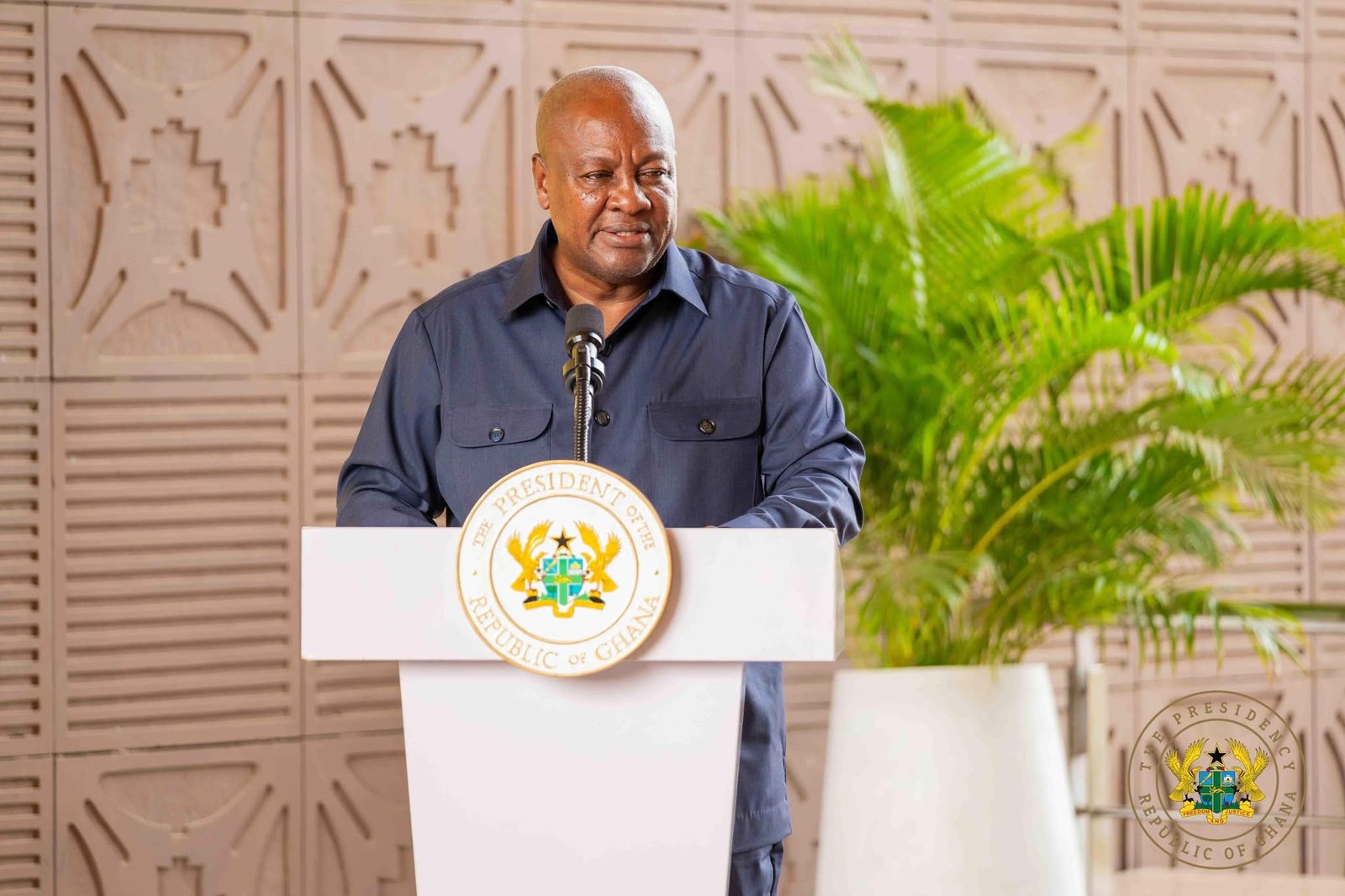
A new survey conducted by the Institute of Economic Affairs (IEA) has revealed that 68% of Ghanaians approve of the way President John Dramani Mahama is handling his job as president, one year after assuming office following the 2024 general elections.
According to the IEA’s press release dated February 11, 2026, the survey, carried out in December 2025, sampled over 1,000 respondents across all 16 regions of the country.
The poll sought to assess public perception of the president’s performance amid ongoing socioeconomic challenges.
The results show that 68% of respondents expressed approval of President Mahama’s job performance, while 22 percent disapproved and 10% indicated they had no opinion or were undecided.
President Mahama was sworn into office on January 7, 2025, inheriting a challenging economic landscape marked by high public debt, currency depreciation, persistent inflation, unemployment, and concerns over the size of government expenditure.
IEA noted that while several key economic indicators have shown signs of improvement over the past year, significant socioeconomic pressures continue to weigh heavily on households.
The survey highlighted widespread public anxiety over the rising cost of living, with 71% of respondents, roughly seven out of ten Ghanaians, saying they are very concerned about the escalating prices of food and other consumer goods.
Unemployment also ranked high among national concerns, with 46% of respondents identifying it as one of the most important issues facing the country. Illegal mining (galamsey) followed closely, cited by 30% of participants as a major problem.
The IEA observed that although President Mahama enjoys relatively strong public support, the presence of a significant minority who disapprove or remain neutral indicates that more work needs to be done to address citizens’ pressing concerns and further consolidate public confidence.
“The survey paints a picture of a mixed public mood — robust approval for the President’s leadership and performance, alongside deep-seated worries about the economic hardships affecting ordinary Ghanaians,” the IEA stated.