

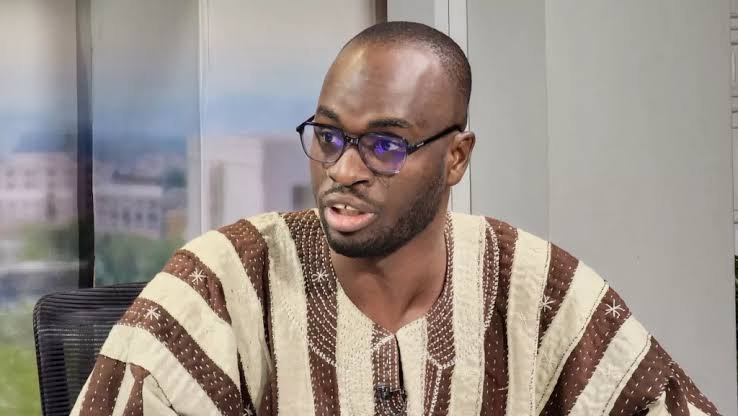
Walewale Member of Parliament, Dr Tia Kabiru, has asserted that Ghana’s current macroeconomic stability is primarily driven by the International Monetary Fund (IMF) programme rather than any exceptional policy ingenuity from the government.
Speaking on Joy News on Wednesday, January 8, 2025, the New Patriotic Party (NPP) lawmaker acknowledged some economic gains but emphasized that these achievements are neither unprecedented nor unique to a first-term administration.
“To be blunt, the economy has achieved some successes to that extent, you will give credit to the managers of the economy. But is it novel? Is it the case that it has never been done in any first year of a government? And the answer is no,” he stated.
Dr Kabiru warned against an overblown narrative surrounding the current economic performance, pointing out that similar or even stronger indicators were recorded in previous periods under IMF-supported initiatives.
He referenced the years between 2017 and 2019, when Ghana saw robust growth, primary budget surpluses, and positive macroeconomic metrics, all backed by IMF arrangements.
“In 2017, we had similar euphoria around the first budget. We had growth that was far in excess of what we are experiencing now. We had a primary budget surplus and all the positive indicators. But we have to also know that in all these years, we had IMF-supported programmes,” he explained.
The MP urged restraint in portraying the stability as groundbreaking, adding, “Whilst we give credit, let us not create a sense that this is the first time, in a government’s first year in office, that we are having this kind of result.”
To bolster his point, Dr Kabiru compared public approval ratings, noting higher enthusiasm in the past.
“The euphoria around the 2017 budget, and the outcome of that budget, with the greatest respect, was far more than what we are experiencing. Approval rating for the president at the end of his first year, according to Afrobarometer, was 70 per cent. Here we are having 67 per cent,” he said.
While not dismissing the progress entirely, he remarked, “That notwithstanding, I do not want to diminish the impact, the growth, the macroeconomic and price stability that we are experiencing.”
However, Dr Kabiru insisted that an honest evaluation must prioritize the IMF programme as the central force behind the recovery.
“If anyone wants to say that anything has contributed to this without first acknowledging the IMF-supported programme we have, which has served as an anchor, which is the big man in the house driving whatever we do, then I disagree,” he argued.
He cautioned that without the programme, the country risked reverting to fiscal indiscipline, stating, “But for the programme, we may have to see some government fiscal indiscipline.”
The lawmaker commended the President and the Finance Minister for their commitment to the IMF framework but criticized any portrayal of the recovery as purely domestically driven.
“The fact that the President and the Finance Minister have committed to the programme is worthy of commendation. But for me, we should not create a sense that it is the first time it’s happening,” he said.
Dr Kabiru also called for a cautious view of the recovery, adding, “We should only hope and pray that it is sustainable. We shouldn’t be looking at the recovery as something that we should celebrate over.”
He further noted that some credit should go to the previous government for initiating the IMF programme that now underpins the economy.
“There is a programme that the previous government initiated that the previous government must actually also take some of the credit for,” he said.
In conclusion, Dr Kabiru emphasized that the real measure of the economy’s health would emerge in the coming years.
“Let’s see how we move into the second and third year. If the government should put in the third year, then we would know the true state of the economy, and whether or not the commendation we are giving now should be temporary or permanent,” he added.