

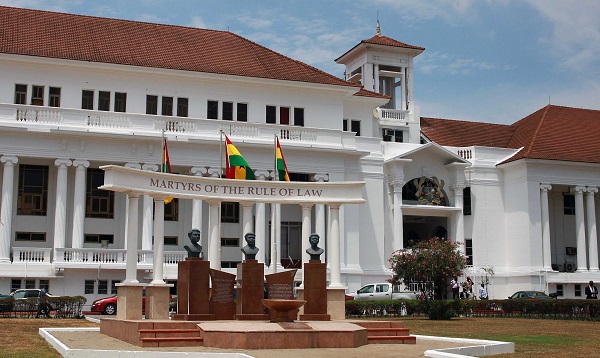
The Supreme Court has granted a coalition of civil society organisations (CSOs) leave to join an ongoing constitutional suit challenging the Office of the Special Prosecutor’s (OSP) authority to independently initiate criminal prosecutions without the Attorney-General’s prior approval.
A seven-member panel of the apex court, presided over by Chief Justice Justice Paul Baffoe-Bonnie, unanimously admitted the organisations after hearing arguments on their application for joinder.
The panel included Justices Avril Lovelace-Johnson, Gabriel Scott Pwamang, Emmanuel Yonny Kulendi, Ernest Yao Gaewu, Gbiel Simon Suurbaareh, and Senyo Dzamefe.
The CSOs, represented by lawyer Kizito Beyuo, include Transparency International Ghana, Ghana Anti-Corruption Coalition (GACC), STAR-Ghana Foundation, PenPlusBytes, Africa Centre for Energy Policy (ACEP), IMANI Africa, One Ghana Movement, Africa Education Watch, and other governance-focused groups.
The substantive case was instituted by private citizen Noah Adamptey against the Attorney-General, questioning the constitutionality of provisions allowing the OSP to prosecute independently.
At Tuesday’s sitting, Deputy Attorney-General Dr Justice Srem-Sai informed the court that the state was not opposing the motion for joinder. He noted that the plaintiff had also written to the court on the matter.
Moving the application, Mr Beyuo argued that the suit raised significant constitutional interpretation issues with far-reaching public implications. He emphasised that the applicant organisations possess deep expertise and institutional knowledge in anti-corruption matters, having played pivotal roles in the advocacy that led to the establishment of the OSP.
“The applicants have been actively engaged with successive governments on anti-corruption reforms and accountability, particularly regarding politically exposed persons,” counsel submitted.
Beyuo further noted that Article 2 proceedings are unique public interest actions that allow citizens to invoke the Supreme Court’s jurisdiction, and that the CSOs could provide valuable assistance to the court.
In granting the application, Chief Justice Baffoe-Bonnie ruled that the CSOs had demonstrated sufficient interest and that their participation would help the court reach a “lasting” and durable decision on the matter.
“The applicants have made a case for the court to admit them to assist the court to arrive at a decision that would be lasting,” the Chief Justice stated.