

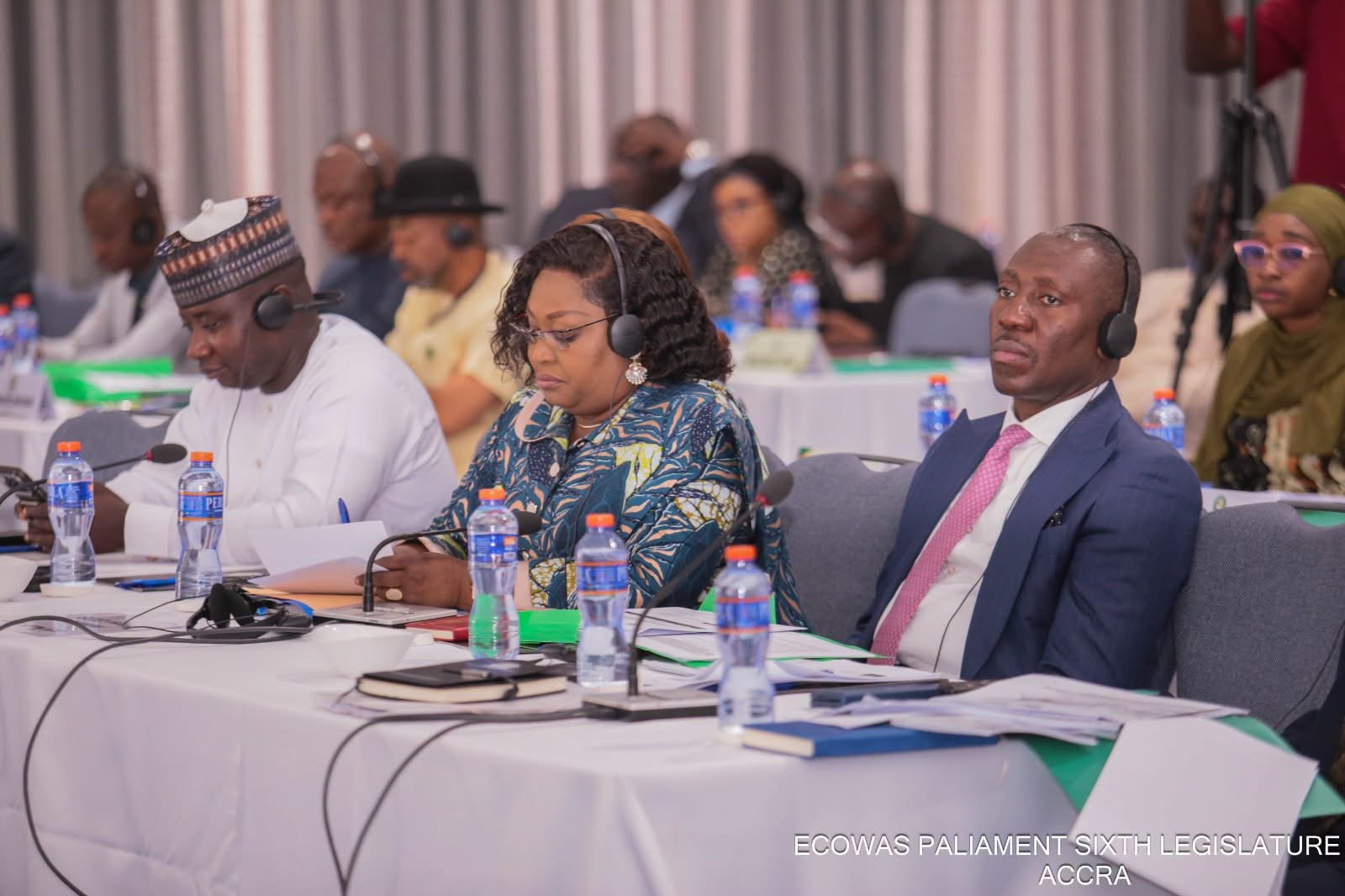
The ECOWAS Parliament has opened discussions on the impact of climate change on communities, livelihoods and living conditions across the West African region.
The issue is at the centre of the Second Parliamentary Seminar of the year 2026, which is being held in Accra from September 21 to 23, bringing together parliamentarians, experts and other stakeholders.
Opening the seminar on Monday, September 21, Speaker of the ECOWAS Parliament, Hadja Mémounatou Ibrahima, said climate change could no longer be viewed only through scientific measurements, statistics and projections.
She said its consequences were increasingly evident in communities through declining agricultural productivity, coastal erosion, flooding, loss of livelihoods and displacement.
“Climate disruption can no longer be measured only in degrees, statistics or projections,” she said.
“It is read in land that yields less, in coastlines that retreat, in flooded neighbourhoods, in families losing their livelihoods, and in communities forced to relocate.”
According to the Speaker, the challenge therefore goes beyond environmental concerns and raises fundamental questions about the protection of people’s living conditions, dignity and security.
“Behind the climate question lies a profoundly human one: how do we protect the living conditions, dignity and security of our populations when their environment is changing faster than their capacity to adapt to it?” she asked.
She said the three-day seminar would seek to connect technical knowledge on climate change with the practical experiences of parliamentarians who remain closely engaged with communities in their respective territories.
Mrs Ibrahima said the objective was not merely to repeat existing knowledge about climate change but to deepen understanding of its implications for ECOWAS member states and identify appropriate responses.
She said experts participating in the seminar would provide technical perspectives to inform the discussions, while parliamentarians would contribute their understanding of the realities confronting their constituents.
“It is from this dialogue between technical knowledge and lived realities that truly useful proposals can emerge,” she said.
The Speaker urged participants to approach the seminar with a focus on substantive discussion, listening and practical work.
She said the deliberations should ultimately help the region develop responses capable of protecting vulnerable populations as climate-related pressures intensify.
The parliamentary seminar forms part of the ECOWAS Parliament’s broader efforts to strengthen regional cooperation and parliamentary engagement on issues affecting member states.
The three-day seminar runs from September 21 to 23, 2026, with the joint solemn opening of the extraordinary session and the parliamentary seminar scheduled for Tuesday, September 22.