LSN backs calls for Constituent Assembly on constitutional review

The Law Students’ Network (LSN) has backed calls for a Constituent or Consultative Assembly to deliberate on contested proposals in Ghana’s ongoing constitutional review process.
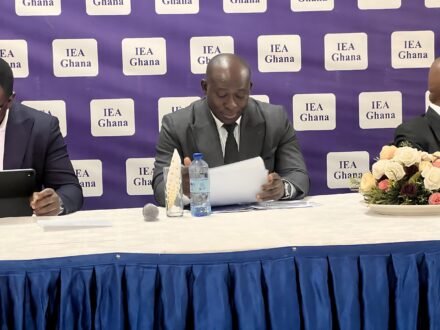
The network’s President, Abraham Kwaku Gyasi, made the case at a roundtable organised by the Institute of Economic Affairs (IEA) for student and youth groups at the IEA Dialogue Centre in Accra on Tuesday, October 13.
In a paper presented at the forum, the LSN described a proposal by the opposition New Patriotic Party (NPP) for such an assembly as “worthy of serious consideration”. The NPP made the proposal in a statement issued on September 17, 2026.
The network said the concerns underlying the proposal transcended partisan politics, noting that the Ghana Bar Association and civil society organisations had made similar calls.
According to the LSN, a properly constituted assembly would provide a structured platform for political parties, organised labour, professional associations, traditional authorities, religious organisations, civil society groups, academics, women, persons with disabilities, students and young people to contribute to the constitutional review process.
It said such a forum would allow stakeholders to examine differences, negotiate compromises and scrutinise alternative constitutional proposals transparently.
The network stressed, however, that an assembly established through appropriate legislation would serve only an advisory and deliberative role. It would neither usurp Parliament’s constitutional responsibilities nor replace the referendum requirements under Article 290 of the 1992 Constitution.
The LSN also cited Ghana’s constitutional history, noting that the processes leading to the 1969, 1979 and 1992 Constitutions involved representative deliberative assemblies. It acknowledged, however, that those processes occurred during transitions to new constitutional orders and were not legally identical to amendments to an existing Constitution.
The network recognised the government’s arguments against establishing a new assembly, including the extensive public consultations conducted by the Constitution Review Committee (CRC), chaired by Professor H. Kwasi Prempeh, the existing amendment procedures under Articles 290 and 291 of the Constitution, and the potential financial cost of creating another institution.
It nevertheless argued that consultations conducted during the preparation of an expert report were not necessarily equivalent to collective deliberation on the government’s subsequent departures from the report’s recommendations.
The LSN added that an inclusive process need not be indefinite or excessively expensive if it operated under a clear legislative mandate and reasonable timelines.
Among its proposals, the network called for a public comparative document outlining each original CRC recommendation, the government’s response, objections raised by stakeholders and the reasons for any compromises. It also recommended a legislated roadmap specifying consultation periods, publication requirements and civic education measures.
Additionally, the LSN urged the authorities to frame referendum questions in a way that would prevent unrelated and controversial amendments from being automatically combined.
The network said its proposals were not intended to give political parties veto powers or delay constitutional reform, but to ensure that disagreements were resolved “through credible institutions rather than avoided through procedural expediency”.
Other speakers at the forum included representatives of the National Union of Ghana Students (NUGS) and the Ghana Youth Federation (GYF).
Former Speaker of Parliament and IEA Distinguished Fellow, Professor Aaron Mike Oquaye, delivered the opening and closing remarks.