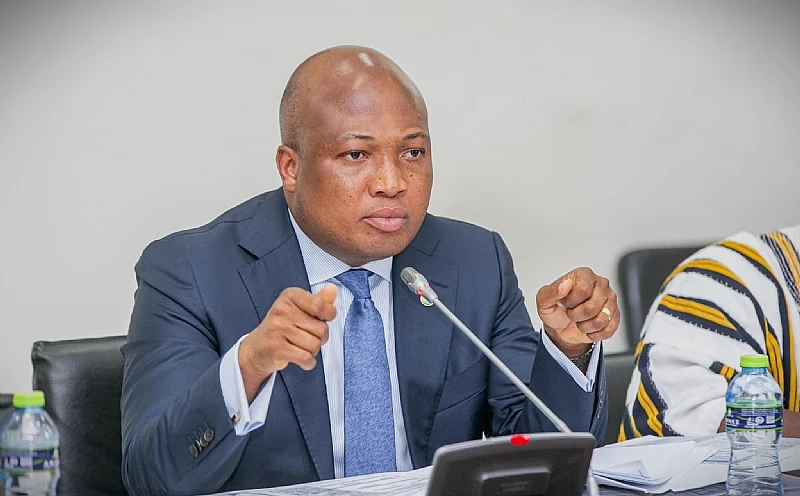
Transitioning from fossil fuels must protect jobs, energy security and economic stability – Minister for Foreign Affairs
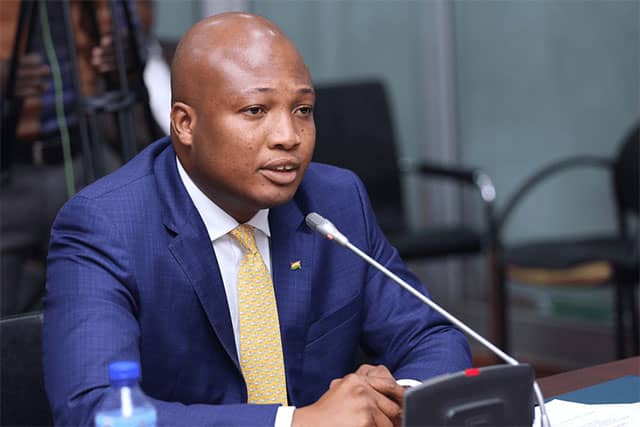
Ghana has called for safeguards to protect jobs, energy security and economic stability as countries consider a global framework for transitioning away from fossil fuels.
Minister for Foreign Affairs, Samuel Okudzeto Ablakwa, said the shift towards cleaner energy must reflect the economic realities and development priorities of individual countries rather than follow a uniform timetable.
He made the remarks at a ministerial meeting on the proposed Fossil Fuel Treaty and financing for an equitable transition away from fossil fuels at the Admiral Ballroom of Sandals Grande Antigua Hotel in Antigua and Barbuda on Monday, November 2, 2026.
Mr Ablakwa said Ghana supported efforts to advance the proposed treaty but maintained that the transition must be gradual, adequately financed and sensitive to the needs of countries whose economies still depend on petroleum resources.
He highlighted the contribution of Ghana’s petroleum sector to government revenue, foreign exchange earnings, electricity generation and the supply of liquefied petroleum gas (LPG) for domestic cooking.
He said these economic and energy considerations must inform Ghana’s transition pathway to ensure that efforts to reduce dependence on fossil fuels do not compromise affordability, economic stability, livelihoods and national development.
The minister also stressed that countries had different capacities and responsibilities in addressing climate change, invoking the principle of Common but Differentiated Responsibilities and Respective Capabilities (CBDR-RC).
He cautioned against imposing identical transition timelines on countries with different levels of development, energy needs and financial resources.
Mr Ablakwa called for dedicated financing arrangements to support developing countries, including grants, concessional loans, technology transfer and technical assistance.
He further emphasised the importance of protecting workers and communities likely to be affected by changes in the energy sector, while ensuring that countries retained the sovereignty to determine their own energy policies.
The meeting brought together ministers and senior officials to examine the objectives of the proposed Fossil Fuel Treaty, the challenges associated with moving away from fossil fuels and the financing needed to ensure that the transition is fair and sustainable.
Antigua and Barbuda, which hosted the meeting, highlighted the particular vulnerability of small island developing states to hurricanes, rising sea levels and coastal erosion. Its Minister responsible for Health, Wellness, Environment and Civil Service, Sir Molwyn Joseph, called for international support to help vulnerable countries reduce dependence on imported fossil fuels and expand renewable energy.
Bahamas Minister for Foreign Affairs and Immigration, Fred Mitchell, also called for reforms to the international financial architecture to mobilise resources for energy transition, climate adaptation and resilience.
A financing proposal presented by former Central Bank of Trinidad and Tobago Governor, Jwala Rambarran, included a proposed Transition Financing Facility under the treaty. The facility would provide grants and concessional financing, while exploring debt restructuring, disaster-related debt suspension, debt-for-climate swaps and investment guarantees.
The wider initiative seeks to establish an international framework for coordinating efforts to transition away from fossil fuels, amid concerns over energy insecurity, volatile fuel prices and the escalating impacts of climate change.
Diplomatic discussions are expected to continue towards securing a negotiating mandate for the proposed treaty, with the next Conference on Transitioning Away from Fossil Fuels scheduled for Tuvalu in July 2027. The inaugural conference was held in Santa Marta, Colombia, in April 2026.