Africa must not be apologetic in dismantling colonial trade models – AfCFTA
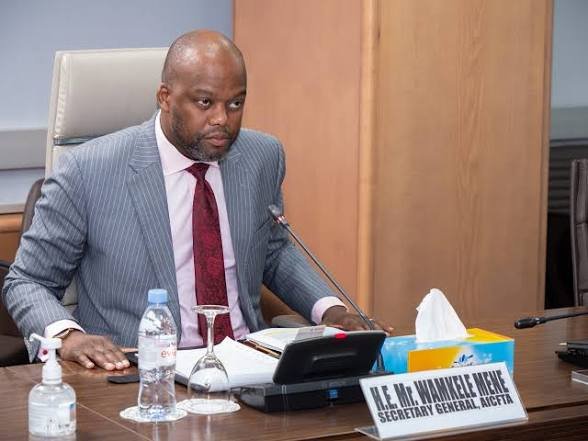
The Secretary General of the African Continental Free Trade Area (AfCFTA), Wamkele Mene, has stated that Africa must unapologetically pursue economic sovereignty by dismantling the colonial economic model inherited from the past.
Mene made the remarks in Accra on Monday, August 31, 2026, at the signing of a Joint Venture Agreement between the AfCFTA Secretariat and Quest Ghana for the establishment of a Digital Trade Corridor.
He said Africa could not achieve the full objectives of the continental free trade agreement if it continued to rely on economic structures inherited from colonialism.
“We must not be apologetic about dismantling the economic model that we inherited, which is colonialism. We must dismantle it fully,” Mene said.
He clarified that dismantling the inherited economic model did not mean Africa was withdrawing from the global economy, but rather that the continent must assert greater control over its own economic systems.
“We must assert our own economic sovereignty,” he said.
Mene identified cross-border payments as one of the areas in which Africa must urgently exercise greater control, questioning why billions of dollars in transactions for intra-African trade should continue to pass through third currencies.
“We can no longer sustain third currencies receiving billions of transactions, of dollars in transactions for intra-Africa trade,” he said.
According to him, the situation was unacceptable because the AfCFTA was established to create a new trade regime for the continent, including an integrated payments infrastructure.
He said Africa would not achieve that objective by continuing to build its trade systems on “pre-existing colonial models of the economy”.
The AfCFTA Secretary General said the Digital Trade Corridor being developed with Quest Ghana formed part of efforts to establish the infrastructure needed to support Africa’s economic transformation and sovereignty.
He described the Pan-African Payment and Settlement System (PAPSS) as a continental payments “highway” that allows other payment systems and financial institutions to connect to it.
Mene disclosed that about 150 commercial banks had connected to PAPSS, while 21 central banks were already participating in the platform.
He stressed that Africa needed more investment in digital infrastructure and rejected the suggestion that there were already too many players in the sector.
According to him, the continent would require billions of dollars in additional public and private investment to develop the digital infrastructure needed to make African economies globally competitive.
Mene said Africa’s digital transformation was particularly important because it could expand economic participation among young people, SMEs, informal traders and smallholder farmers.
He pointed to the continent’s experience with mobile money, digital payments and mobile banking as evidence of Africa’s capacity for digital innovation.
He said such innovations had enabled Africa to reach a level of maturity in the digital economy that, in some respects, was ahead of developments in some developed countries.
Mene also said Africa’s digital economy must help retain more economic value within the continent, particularly through payment systems that allow transactions to be settled in African currencies without relying on third currencies or third countries.
He cited the projection that Africa’s digital economy could exceed US$710 billion by 2035 and said the target would require immediate action rather than continued reliance on projections.
“The projection of a digital economy of over 710 billion United States dollars must become a reality by 2035,” he said.
He said the Joint Venture Agreement with Quest Ghana demonstrated the shift from policy formulation to practical implementation.
“We are moving from policy, from talk to action,” Mene said.
He called for stronger collaboration between governments, private-sector institutions and investors to develop an integrated African digital economy in which SMEs, young entrepreneurs and large corporations could participate meaningfully.
The agreement was signed at the Movenpick Ambassador Hotel in Accra, with Seychelles expected to host the headquarters of the joint venture.