

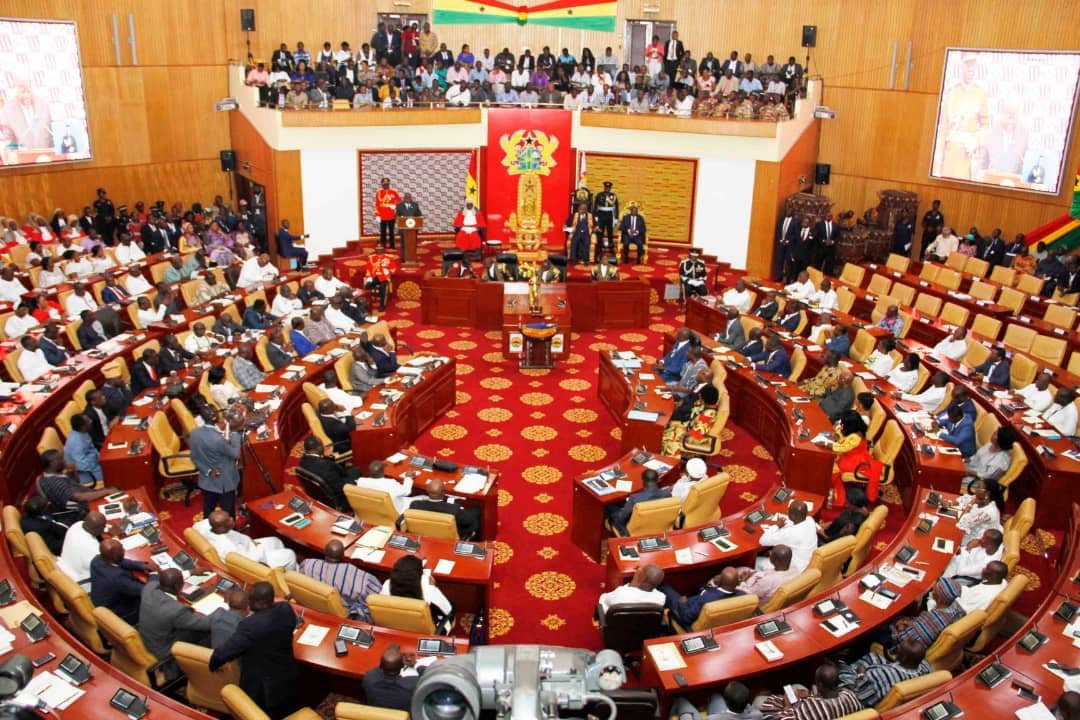
Parliament has referred a special audit report on government arrears and payables totalling GH¢68.7 billion to the Public Accounts Committee (PAC) for in-depth investigation after the exercise uncovered significant irregularities, including suspected fraud and falsified documentation.
The report, which covers arrears and payables as at the end of 2024, was laid before the House on Tuesday, March 10, 2026, by Deputy Finance Minister Thomas Nyarko Ampem on behalf of Finance Minister Dr Cassiel Ato Forson. First Deputy Speaker Bernard Ahiafor subsequently directed the matter to the PAC and instructed the committee to conclude its probe and submit its findings within three weeks.
The verification and validation exercise was carried out by the Ghana Audit Service in partnership with international professional services firms Ernst & Young (EY) and PricewaterhouseCoopers (PwC). The audit focused on claims submitted by various ministries, departments and agencies, particularly unpaid Interim Payment Certificates (IPCs), invoices and Bank Transfer Advices (BTAs) owed to contractors and suppliers.
In total, claims amounting to GH¢68.7 billion were presented for review. Of this amount, GH¢45.4 billion was validated as legitimate obligations that the government is expected to settle, subject to available fiscal space and any further due diligence. However, auditors rejected GH¢8.1 billion worth of claims due to multiple red flags.
These included unsupported documentation, duplicate entries, overstatements, claims for items already paid, falsified store receipt advice notes, and instances where no work had been performed or goods supplied.
The remaining portion of the claims is currently undergoing additional reconciliation and detailed review. Deputy Minister Ampem, while presenting highlights of the report, emphasised that the rejected claims pointed to serious weaknesses and possible attempts to inflate or fabricate government liabilities.
Government arrears to contractors and suppliers have remained a longstanding fiscal burden in Ghana. The accumulation of such obligations frequently creates cash-flow challenges for the private sector, delays critical infrastructure projects and generates hidden liabilities that are not adequately captured in annual budgets. The recent audit forms part of ongoing efforts to clean up inherited arrears, improve transparency in public financial management and strengthen fiscal discipline during the country’s economic stabilisation programme.
PAC is expected to summon relevant officials, closely examine the questionable claims, determine the extent of any wrongdoing and recommend appropriate sanctions or recovery measures where irregularities or fraud are confirmed.