

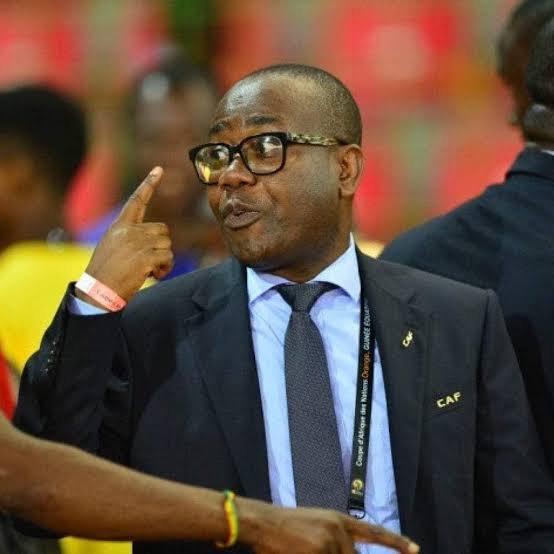
Former Ghana Football Association (GFA) President Kwesi Nyantakyi has disclosed that he was on the verge of ascending to the presidency of the Confederation of African Football (CAF) prior to his abrupt departure from football administration in 2018.
In an interview on Joy News on Tuesday, January 6, 2025, Nyantakyi reflected on his prominent role within CAF, where he served as the first vice president, positioning him as the natural successor to the top seat.
“It was very possible. At the time I exited CAF and football, I was the first vice president of the federation. I was the next most senior football official on the continent of Africa. So it was just a matter of course that if the president was not there, I was the most favourable person to step into his shoes,” he stated.
Nyantakyi emphasized that his potential elevation could have marked a historic milestone for Ghana, with the country producing a CAF president. However, he remains optimistic about future opportunities for Ghanaian administrators.
“So, Ghana would have had a CAF president. Although it is still possible. With the current regime of officers and the future, anybody who works hard can be the president,” he added.
Addressing the personal impact of the scandal that led to his downfall, Nyantakyi expressed resilience, noting that he has moved forward.
“I am not hurt by anything like that. Life goes on. There are many opportunities in life for every individual,” he said.
Nyantakyi’s resignation in June 2018 followed the explosive release of the investigative documentary “Number 12” by journalist Anas Aremeyaw Anas, which uncovered alleged corruption in Ghanaian football.
The footage captured Nyantakyi accepting $65,000 from an undercover reporter disguised as a businessman, while boasting of his influence with then-President Nana Akufo-Addo to advance business deals.
The scandal triggered widespread public backlash, prompting Nyantakyi to relinquish his positions at the GFA, CAF, and FIFA. In October 2018, FIFA imposed a lifetime ban on him for violating ethics and anti-corruption rules, which was later reduced to 15 years.
Criminal proceedings in Ghana were discontinued in February 2025, as prosecutors failed to obtain testimony from crucial witnesses, including Anas, who declined to appear without his protective mask citing security concerns.