

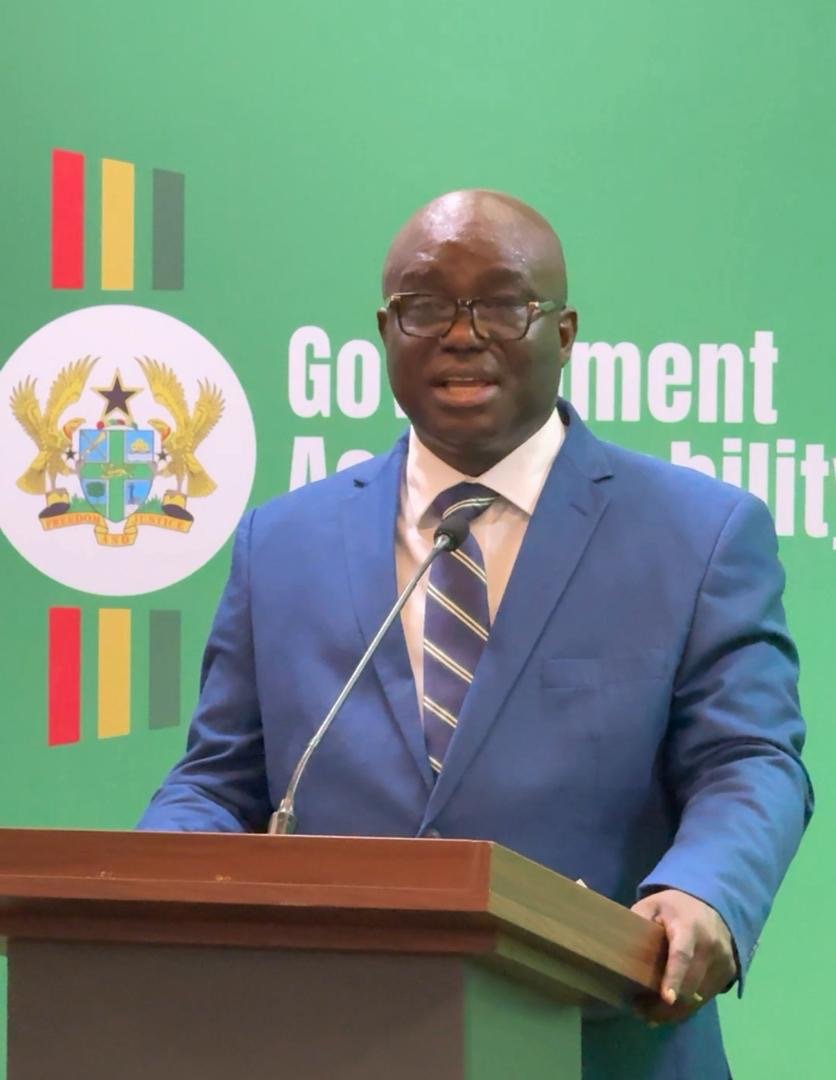
The Minister for Food and Agriculture, Eric Opoku has announced a significant decline in food inflation from 28.3% when the National Democratic Congress (NDC) government took office in January 2025 to 9.5% as of October 2025.
Speaking at a press conference in Accra on Sunday, the Minister highlighted the rapid progress made in stabilising food prices, which had reached crisis levels in previous years.
He noted that between 2022 and early 2025, food prices soared across the country. In several major urban markets, the cost of staple goods more than doubled.
The situation peaked in January 2023 when food inflation hit a historic 61%, the highest ever recorded in Ghana.
He noted that although inflation eased slightly after 2023, it remained stubbornly high, severely affecting household purchasing power and increasing the cost of living.
“By the time the NDC government assumed office on January 7, 2025, food inflation stood at 28.3%, reflecting a fragile economic environment,” he added.
The Minister attributed the sharp drop to 9.5% within ten months to targeted interventions and stronger policy direction aimed at boosting local agricultural production and reducing the country’s heavy reliance on imported food.
Ghana had been spending close to $3 billion annually on imports of basic items such as rice, poultry, vegetable oils, sugar, and processed foods — commodities that can be produced domestically.
This dependence drained foreign exchange reserves and exposed the country to global price volatility.
Among the key reforms, the government has prioritised seed sovereignty. For years, delayed deliveries of imported seeds disrupted planting seasons and lowered yields.
To address this, the Ministry has deepened collaboration with local research institutions on seed development, testing, and certification. In a major policy announcement, the Minister revealed that starting from 2026, all seeds supplied to Ghanaian farmers will be sourced locally.
The Minister described the decline in food inflation as offering significant relief to families and businesses, while laying the foundation for a more resilient and self-sufficient food system in Ghana.