

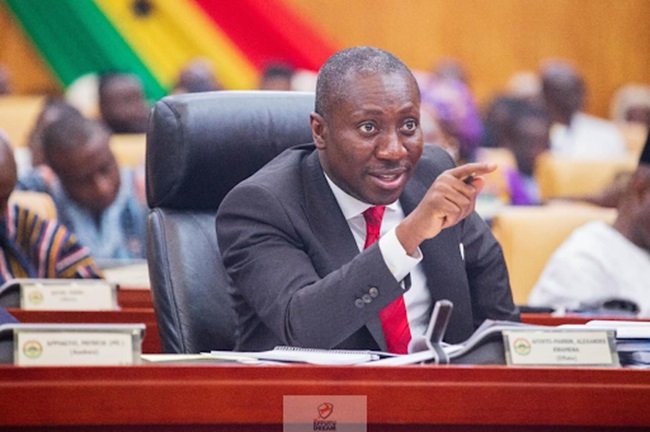
Minority Leader in Parliament, Alexander Afenyo-Markin, has described the Free Senior High School (Free SHS) programme as the most significant and far-reaching social intervention policy implemented in Ghana since the advent of the Fourth Republic in 1992.
The Effutu Member of Parliament made the assertion while addressing students and participants at the Young Commons Forum held at the University of Cape Coast on Saturday, February 21, 2026.
According to Afenyo-Markin, despite ongoing public debates and criticisms surrounding the policy, its profound impact on expanding access to secondary education remains undeniable and transformative.
He emphasised that the initiative, introduced under former President Nana Addo Dankwa Akufo-Addo in 2017, fundamentally changed the secondary education landscape by eliminating financial barriers that previously prevented many students from enrolling in senior high school.
“The critics can be loud and say all they can about the Free SHS but by far, without arguments, it stands as the most emblematic social intervention of the Akufo-Addo administration. And without subjecting it to any further argument, the most consequential social intervention in Ghana’s Fourth Republic,” Afenyo-Markin stated.
He further highlighted that by removing financial obstacles at the secondary level, the policy has drastically increased opportunities for thousands of students from low-income households who would otherwise have been excluded from senior high education.
The Minority Leader argued that the programme’s true value lies in the doors it has opened for economically disadvantaged families, creating a more inclusive educational system and contributing to national development through a better-skilled workforce.
Implemented shortly after the Akufo-Addo administration took office, Free SHS formed part of a broader agenda to reduce inequality, promote equal access to education, and build human capital for Ghana’s future competitiveness.
Since its rollout, the policy has facilitated the enrolment of hundreds of thousands of students across the country, significantly altering patterns of secondary education participation and establishing itself as one of the most prominent and recognisable legacies of the previous administration.