

The New Patriotic Party (NPP) has questioned the financing arrangements behind government’s recent GH¢2 per litre reduction in diesel prices, demanding clarity on the specific margins, levies or taxes being adjusted to fund the intervention.
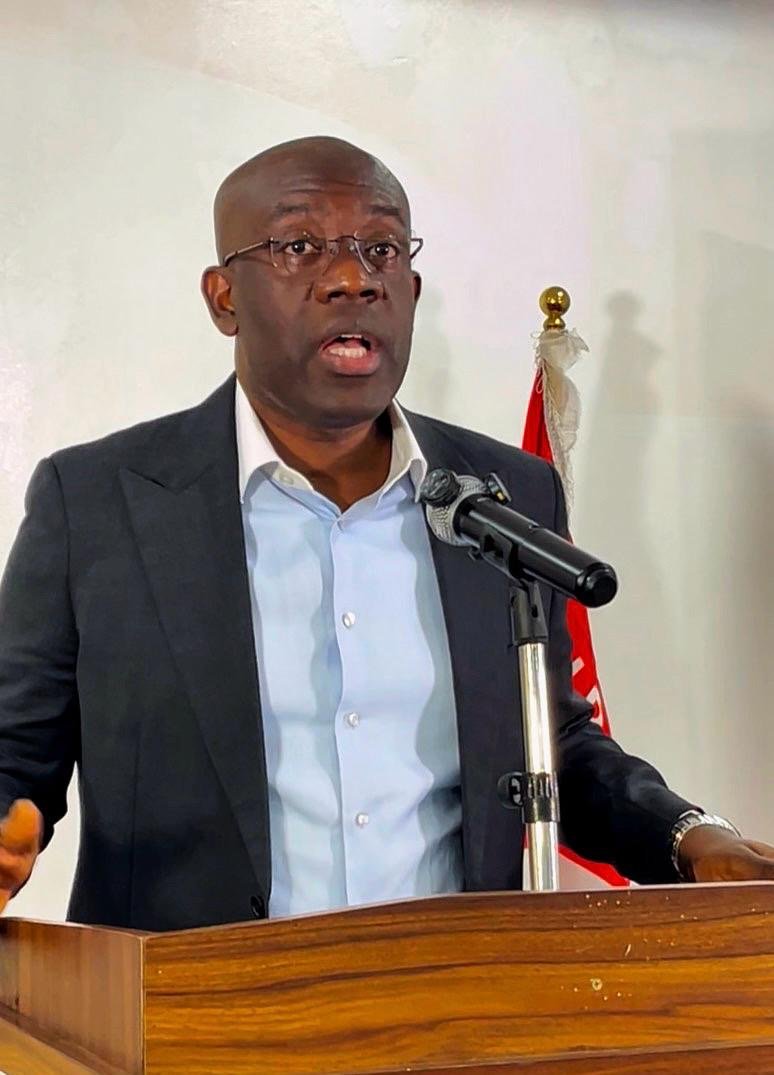
The party’s Policy Co-ordination Committee, led by its Chairman, Kojo Oppong Nkrumah, raised the concerns at a press conference on Wednesday, August 5, 2026, where it addressed the government’s diesel price reduction directive, the Energy Sector Levies (Amendment) Bill, 2026, and developments within the energy sector.
According to the NPP, while it acknowledges the difficulties high fuel prices have imposed on commercial drivers, farmers, fishermen, market women and commuters, the government must provide details on the cost and sustainability of the intervention.
Mr Oppong Nkrumah said the GH¢2 reduction only provides temporary relief and does not reverse the increases in fuel prices recorded over the past months.
The party cited data on fuel prices, stating that diesel sold at about GH¢19.26 per litre on August 3, 2026, compared to approximately GH¢15.49 in January 2025. It argued that even after the GH¢2 reduction, diesel prices would remain above January 2025 levels.
The NPP also questioned the continued application of the GH¢1 per litre petroleum levy introduced through the Energy Sector Levies (Amendment) Bill, 2025, which it said was passed under a certificate of urgency in June 2025.
The party argued that consumers who have paid the levy for more than a year were now receiving only a temporary reduction on diesel prices, while the levy remains in effect.
“The GH¢2 reduction is not generosity. It is a partial, temporary return of money already taken from consumers,” the party said in its statement.
On the financial implications of the intervention, the NPP estimated that the one-month diesel price relief could result in about GH¢400 million in foregone revenue, based on the cost of an earlier diesel price support programme. It further argued that the cumulative cost of fuel interventions announced in 2026 could amount to approximately GH¢1.3 billion.
The party warned that without a clear financing mechanism, the intervention could create new fiscal pressures, including possible arrears within the petroleum supply chain.
The NPP also raised concerns over the Energy Sector Levies (Amendment) Bill, 2026, passed by Parliament on July 31, 2026, which increased the Energy Sector Shortfall and Debt Repayment Levy on fuel oil from GH¢0.24 to GH¢1.93 per litre and extended the Road Fund Levy to fuel oil.
While acknowledging the government’s stated objective of addressing what it described as a misclassification loophole, the party called for clarity on the refund mechanism for affected industrial users.
It questioned who would administer the refunds, who would qualify, how the refunds would be financed and whether consumers who may bear increased costs through companies passing on the levy would also be compensated.
The NPP further referenced the World Bank’s reported downgrade of Ghana’s Energy Sector Recovery Programme, arguing that the country’s energy sector challenges required sustainable solutions rather than interventions that could worsen fiscal pressures.
The party has consequently demanded that government publish the full petroleum price build-up, disclose the financing source for the GH¢2 diesel relief, state whether the intervention was captured in the 2026 Budget and explain how any revenue shortfall would be addressed.
It also called for targeted fuel support for sectors such as public transport, agriculture, fishing and food distribution, rather than broad-based subsidies.