

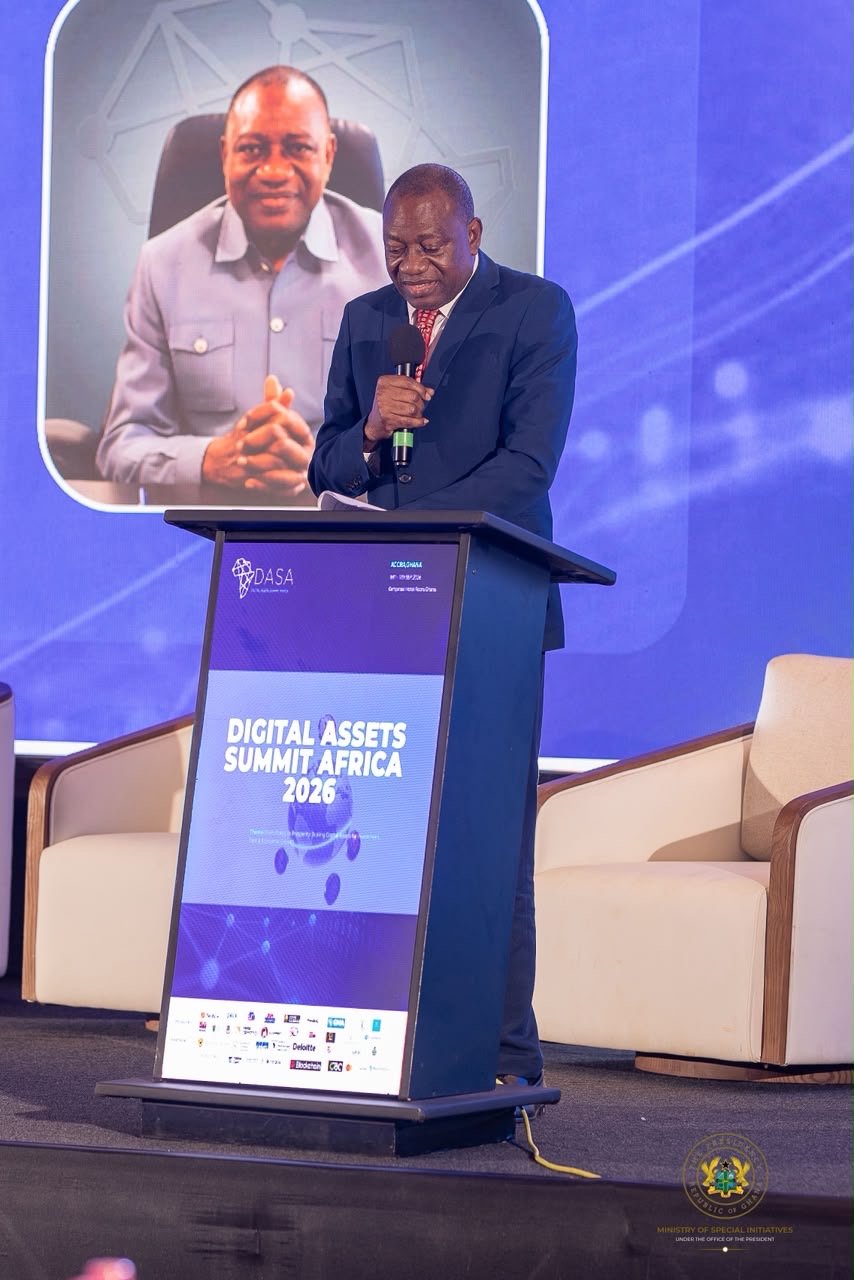
The Minister of State in charge of Special Initiatives, Dr. Abdul-Rashid Hassan Pelpuo, made his maiden public appearance in his new role yesterday when he delivered the keynote address at the Digital Assets Summit Africa (DASA) 2026.
The summit, held on the theme, “From Policy to Prosperity: Scaling Digital Assets for Investment, Jobs and Economic Growth in Africa,” brought together stakeholders to explore the growing role of digital assets and technology in Africa’s economic development.
Dr. Pelpuo expressed his appreciation to the organisers for the opportunity to contribute to the conversation, noting that Ghana’s digital transformation is creating new opportunities in investment, financial services, innovation and employment.
He said the challenge, however, is to ensure that these opportunities are properly regulated and translated into tangible benefits for citizens.
Dr. Pelpuo highlighted Ghana’s strengthened regulatory framework for virtual assets under the Virtual Asset Service Providers Act, 2025 (Act 1154), which provides for the registration, licensing and supervision of virtual asset service providers while promoting consumer protection, cybersecurity and responsible innovation.
He also drew attention to the growing opportunities for young people in areas such as software development, cybersecurity, fintech, data analysis, compliance and digital marketing.
Dr. Pelpuo noted that initiatives such as the One Million Coders Programme, the National Artificial Intelligence Strategy, YouStart and the Smart City and Digital Infrastructure Programme are part of efforts to equip young people with the skills needed to participate meaningfully in the digital economy.
Dr. Pelpuo further disclosed that, under the leadership of President John Dramani Mahama, he had secured $50 million towards the establishment of a new Skills University, as well as an additional $82 million to equip young people for the digital transformation of the labour force.
He said these investments reflect the government’s commitment to moving beyond digital policy to creating real opportunities for jobs, entrepreneurship, innovation and economic growth.
Dr. Pelpuo urged Ghana and other African countries to move from being consumers of technology to becoming creators and owners of digital solutions that address African challenges in areas such as agriculture, trade, financial inclusion, remittances and small-business financing.
He stressed that the success of Africa’s digital transformation must ultimately be measured by its impact on jobs, investment, entrepreneurship, stronger institutions and improved quality of life for citizens.