

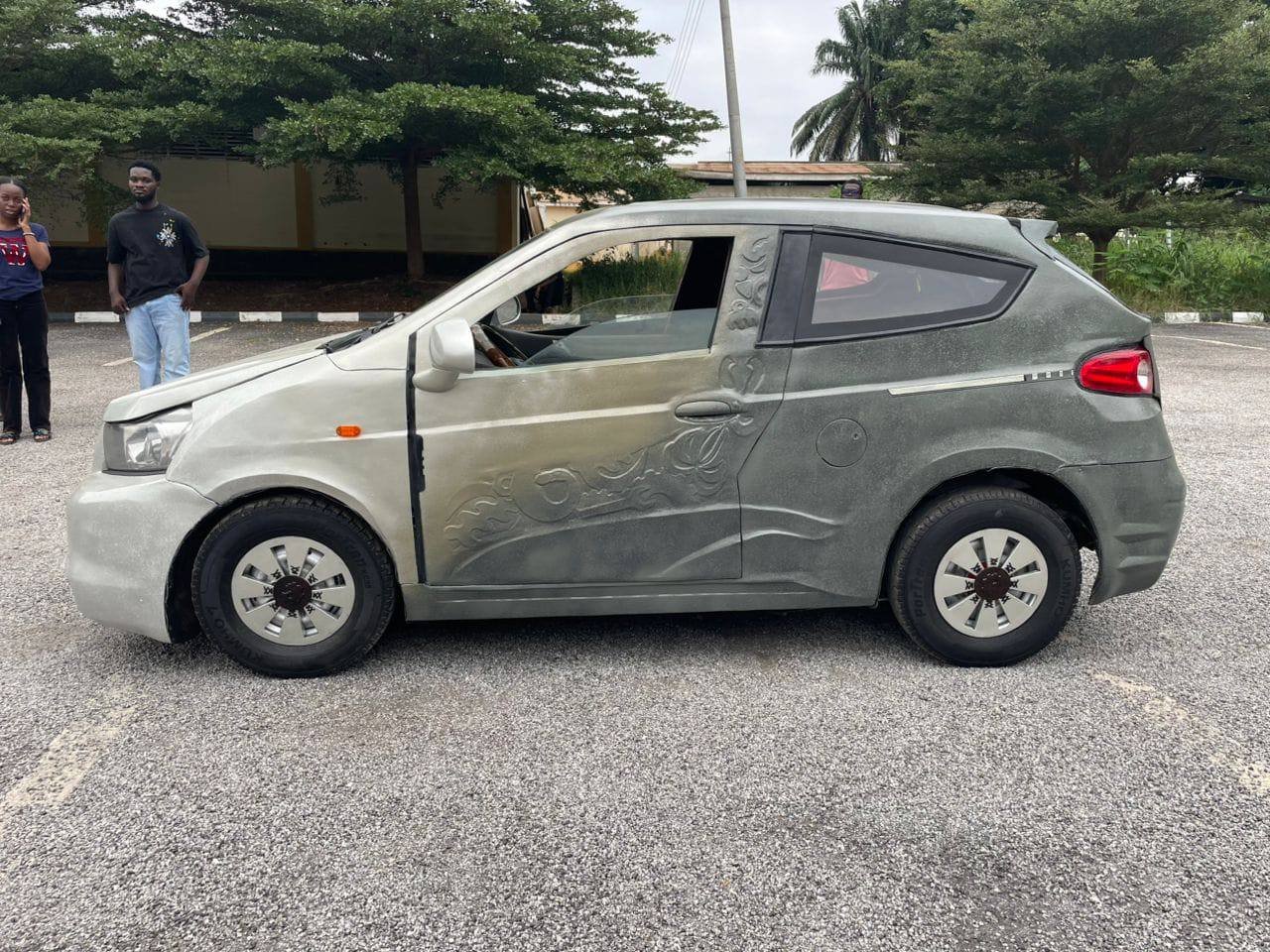
Final-year students studying Indigenous Art and Technology and Automobile Engineering at the Kwame Nkrumah University of Science and Technology (KNUST) have collaborated to design and build a fully indigenous electric vehicle for campus logistics in five months.
The innovation, named E-IMO (Electric Indigenous Mobile) with the series name Nyansapo, is the product of a collaborative effort that blends the precision of engineering with the creativity of art and culture.
Supervised by Dr. Godwin Kafui Kwesi Ayetor from the Mechanical Engineering Department, alongside Dr. Kafui Kwesi Agyeman and Dr. Benjamin Ansah from DIAT, the project highlights the power of STEAM education in driving innovation that is both technologically advanced and culturally grounded.
According to the supervisors, the initiative was motivated by the need to create sustainable, localized mobility solutions that reflect Ghanaian identity while meeting modern transport needs.
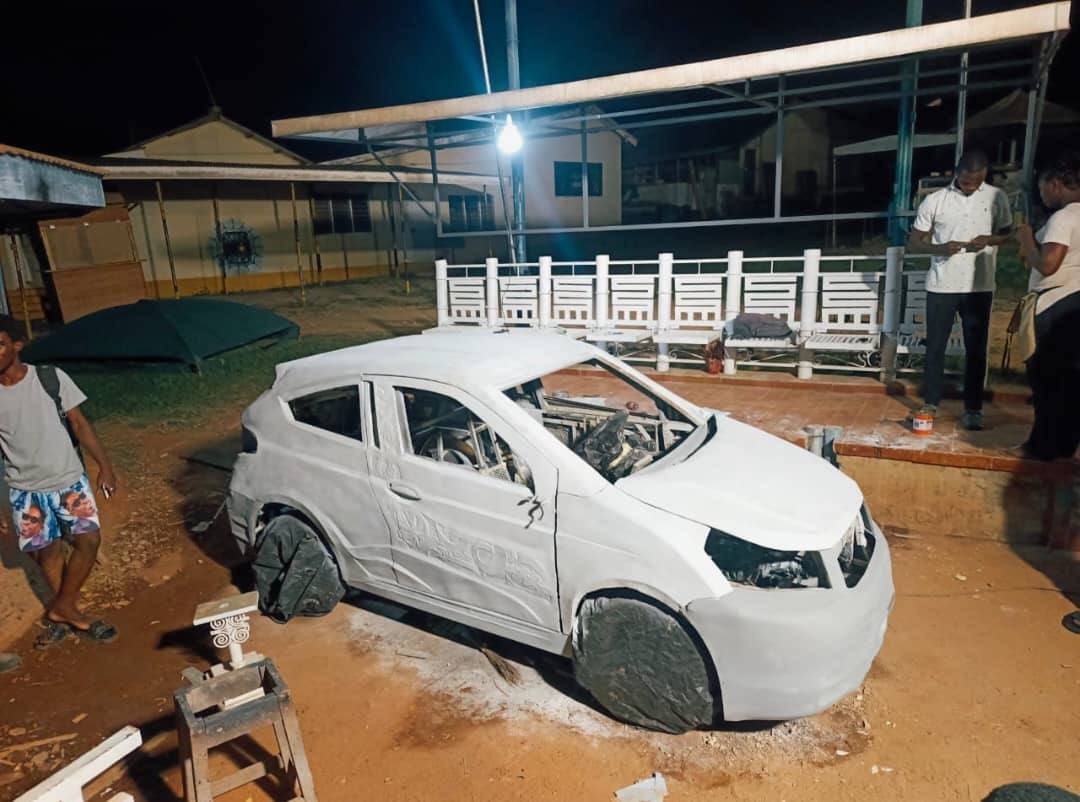
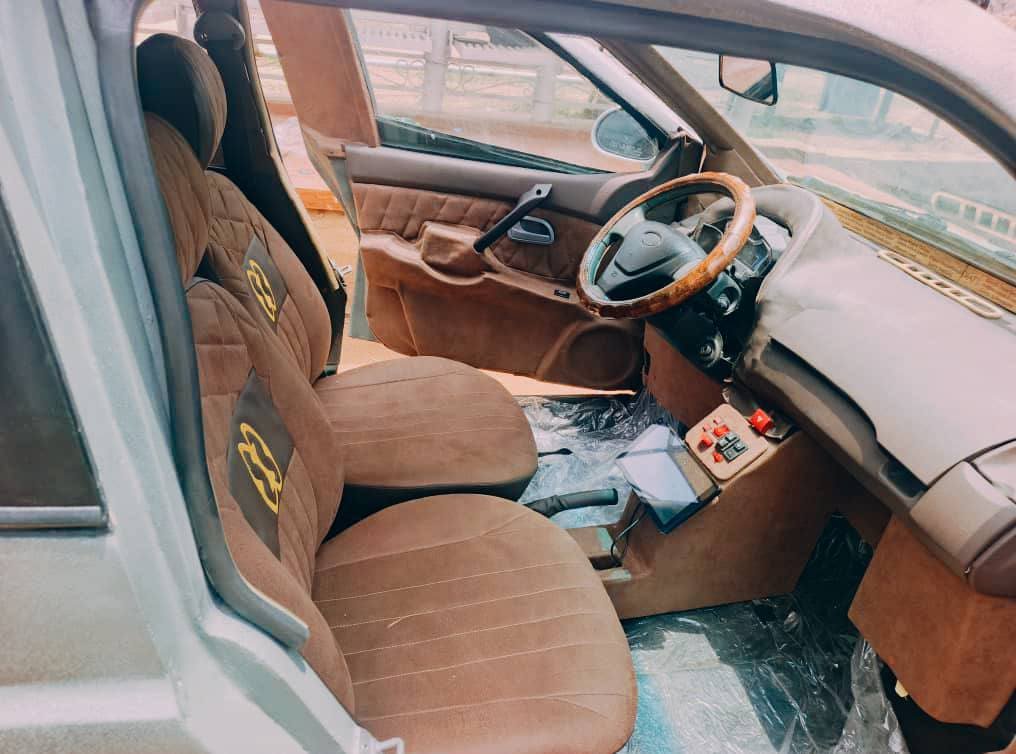
The Nyansapo was inspired by the eagle, a symbol of strength, vision, and resilience. This influence is evident in its biomorphic design and its incorporation of local Ghanaian materials such as vegetable-tanned leather, wood, and metal, all shaped through indigenous handcrafting methods like chiseling.
The vehicle also carries embossed symbols from three Ghanaian ethnic groups, underscoring unity and cultural inclusivity. These artistic integrations distinguish the car from conventional electric vehicles by embedding identity and meaning into its very structure.
Beyond aesthetics, the students focused on functionality and efficiency. The vehicle runs on a lithium battery-powered 2.5KW motor with a maximum speed of 90 km/h and a range of 130 kilometers per charge. It features regenerative braking, an external charging port, and a 12V DC-DC inverter with a control board to ensure efficient energy use.
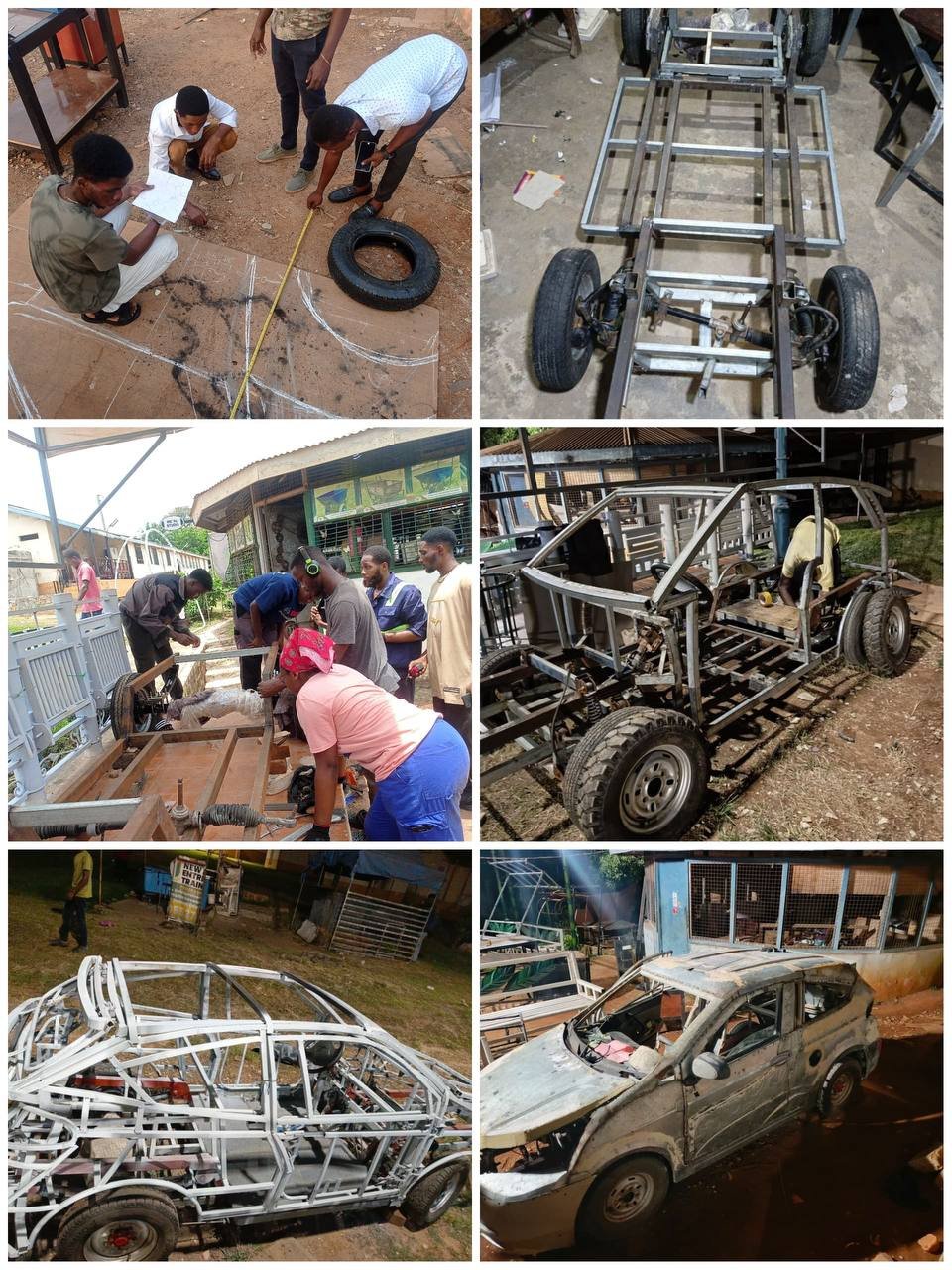
The infotainment system includes an LCD display, a reverse camera, an in-built sound system, and a phone charging feature, making the car as modern as it is indigenous.
The exterior of the Nyansapo showcases handcrafted details such as wooden grilles, locally produced leather wheel caps, fiberglass screens, LED lights, and all-terrain tires.
Its design incorporates a two-trunk system to support its primary purpose: transporting examination materials and administrative items across campus. Inside, the vehicle is fitted with a leather-finished dashboard, custom-designed console, automatic window systems, seat belts, a cooling fan, and an integrated alarm lock system, creating a balance between comfort, safety, and innovation.
The project brought together more than thirty students whose combined skills were crucial in marrying cultural artistry with technical precision. From the Indigenous Art and Technology Department, the team included Kenneth Owusu Koduah, Fordjour Ampofo Richard, Edwin Abbeyquaye, Kingsford Boakye Yiadom, Emmanuel Preko Kwakye, Ernest Kpegah, Akuoko Bismark Sarpong, Benjamin Baidoo, Seth Sarpong Kwadwo, Eric Sagoe, Georgina Odoubou, Nana Akua Dometey Arko, Rooney Adjei, Bernard Opoku Akoto, Anthony Amoako, William Abban, and Mensah Desmond.
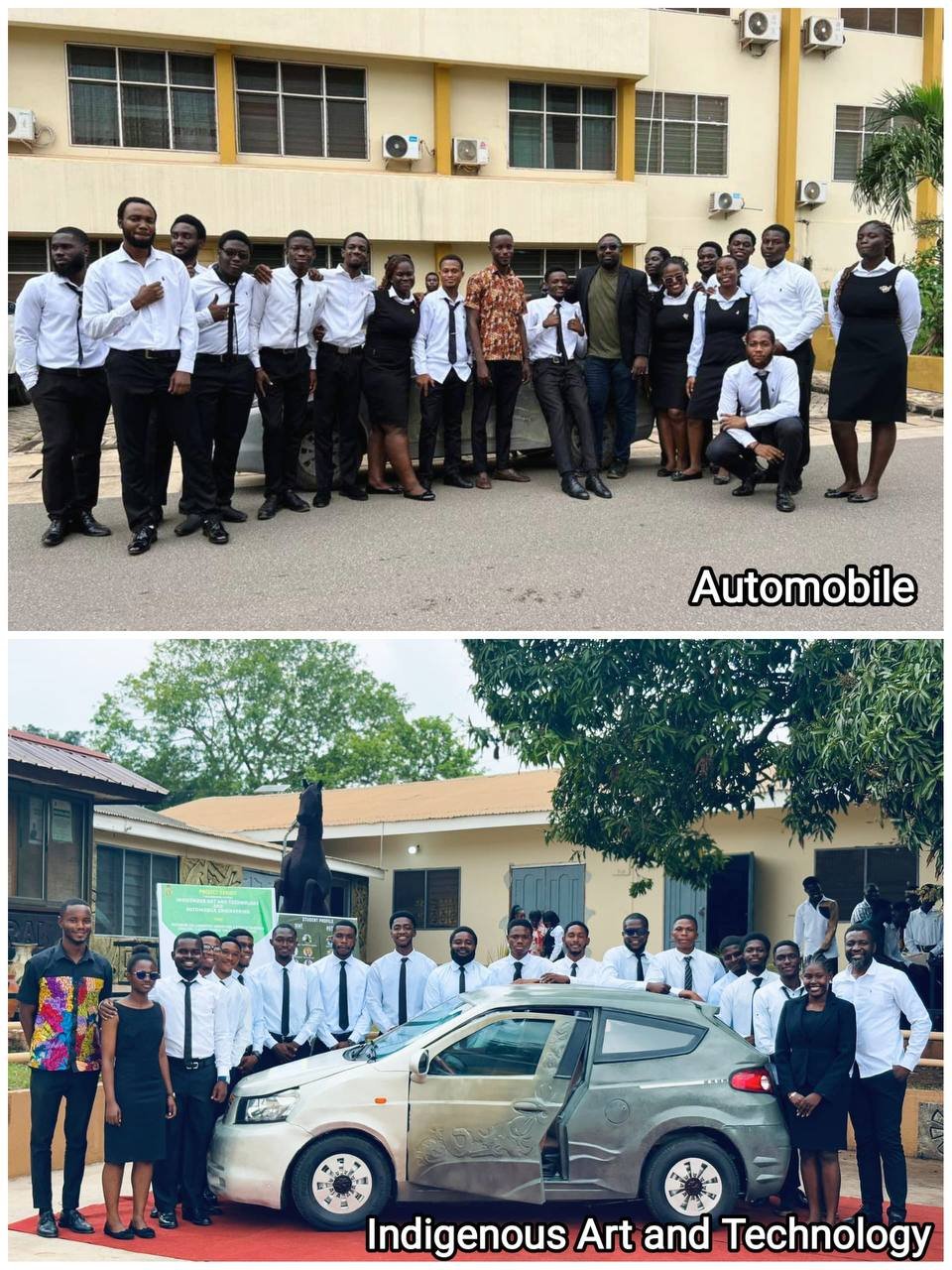
From Automobile Engineering, contributors were Aganbi Frederick, Clifford Sefam Nyadedzor, Rhoda Akua Afedziwaa Coleman, Oliver Kwame Abakah, Boateng Belinda, Klu Raphael Eyram, Boateng Raphael, Gyebison Jojo Maxwell Bempong, Djentuh Ewoenam Ama Serwaa, Darko Opare Prince, Nyanyo Beatrice Kekeli, Forson Michael Abeiku Okyere, Abane Wisdom Dolyine, Ameyaw Anthony Kwakye, Mensah Lord, Cheyuo Michael Baayale, and Larry Samuel.
Together, this diverse group of young innovators delivered an electric vehicle that is both functional and symbolic. Their supervisors praised the dedication and ingenuity of the group, noting that the project is not only a milestone for KNUST but also a demonstration of the potential of Ghanaian universities to contribute meaningfully to the global green mobility conversation.
The students expressed their heartfelt appreciation to Mr. Harold Awuley Quaye, a lecturer at the Department of Indigenous Art and Technology, for his invaluable guidance and support throughout the project. They also extended gratitude to Mr. Eric Fosu, a technician at the department, for his technical assistance, and acknowledged the encouragement and contributions of the entire staff of the Departments of Indigenous Art and Technology and Automobile Engineering, which played a significant role in the success of the work.
With its eco-friendly powertrain, cultural design, and practical utility, E-IMO Nyansapo offers a glimpse into the future of locally engineered solutions. It demonstrates how students, when given the space to innovate, can produce technology that reflects both their heritage and their vision for sustainability. For the KNUST community and beyond, the project is a reminder that the meeting point of art and engineering can spark ideas that are not only functional but also deeply symbolic