

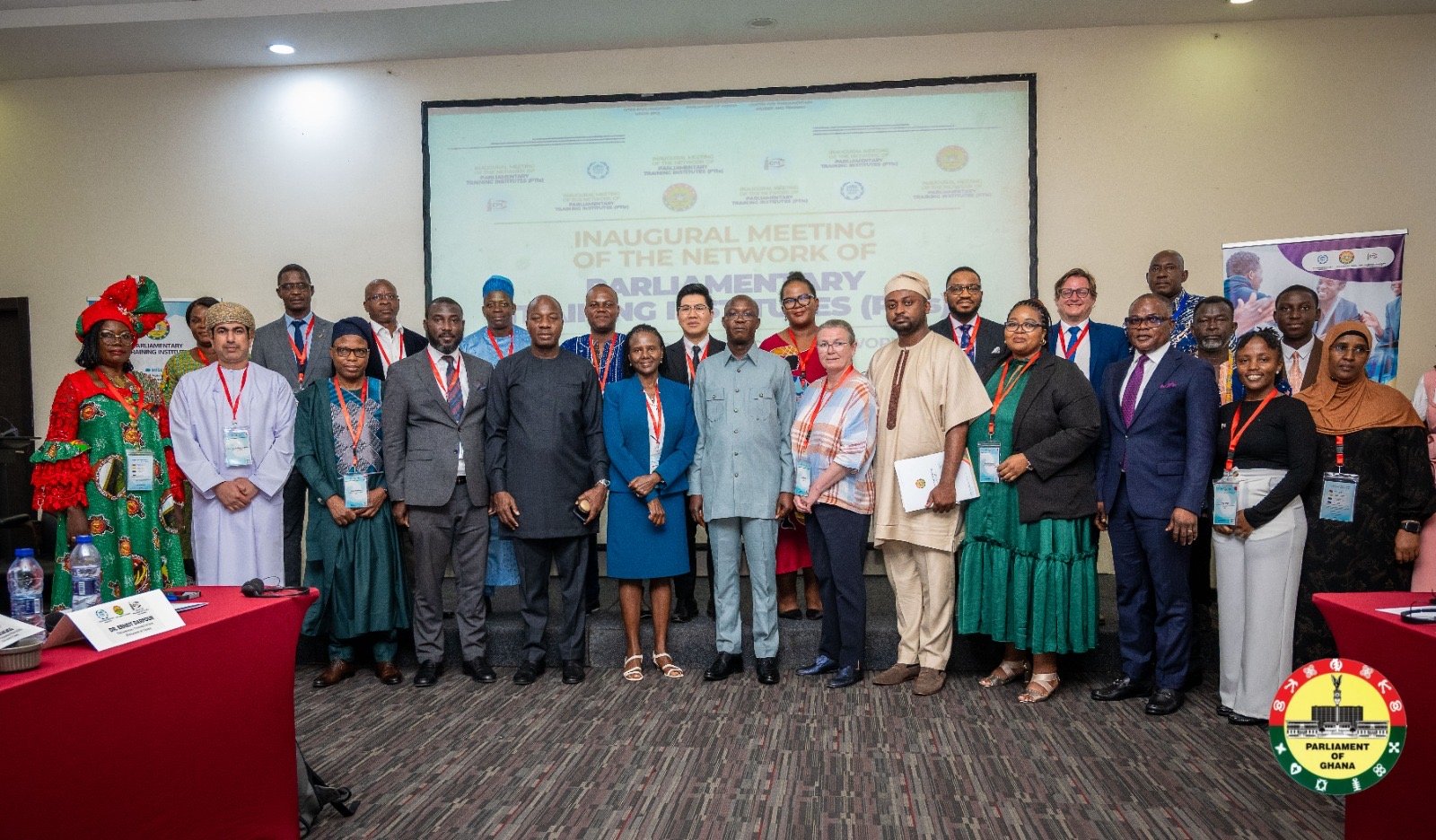
The Parliamentary Training Institute of Ghana has hosted the inaugural meeting of the Network of Parliamentary Training Institutes (PTIs) under the theme “Peer Learning and Networking.”
The event brought together key stakeholders from nearly 30 institutions committed to strengthening parliamentary bodies through peer learning and collaboration.
Delivering the keynote address on behalf of the Speaker of Parliament, the First Deputy Speaker, Bernard Ahiafor, commended the Inter-Parliamentary Union (IPU), the Centre for Parliamentary Studies and Training (CPST), and the Parliamentary Training Institute of Ghana for organising what he described as a timely and strategic initiative.
He noted that Parliamentary Training Institutes serve as the backbone of sustainable capacity development, acting as critical engines for enhancing the effectiveness of parliaments. According to him, these institutes play a central role in democratic governance by supporting Members of Parliament, parliamentary staff, researchers, clerks, and committees.
Ahiafor further emphasised that the meeting offers a valuable opportunity to reflect on shared experiences, learn from one another, and deepen collaboration. He stressed that no parliament has a monopoly on knowledge.
The Majority Leader, Mahama Ayariga, underscored the importance of strong parliamentary institutions, noting that effectiveness goes beyond constitutional establishment and depends largely on well-equipped personnel. He stressed that capacity development must be treated as a core priority to ensure that MPs, staff, and administrators possess the necessary skills, knowledge, and values to perform their duties effectively.
The MP for Old Tafo, Vincent Ekow Assafuah, who spoke on behalf of the Minority Leader, described the establishment of the network as a necessity rather than a choice.
He pointed out that bringing together nearly thirty institutions provides a unique opportunity to promote peer learning, share best practices, and harmonise training approaches, while addressing challenges such as funding and sustainability.
Assafuah added that standardisation should focus on coherence, ensuring a common baseline of competence, integrity, and responsibility across parliaments.
The Clerk to Parliament, Mr Ebenezer Djietror, highlighted the growing importance of Parliamentary Training Institutes in today’s complex governance environment. He noted that as parliaments face increasing demands to legislate, provide oversight, and engage citizens, capacity development has become essential for both effectiveness and public trust.
He described the newly formed network as a vital platform for strengthening collaboration, addressing emerging challenges, and supporting the development of modern, responsive parliamentary democracies.
The two-day event, which took place from March 23 to 24, 2026, in Accra, was organised in collaboration with the Inter-Parliamentary Union.