

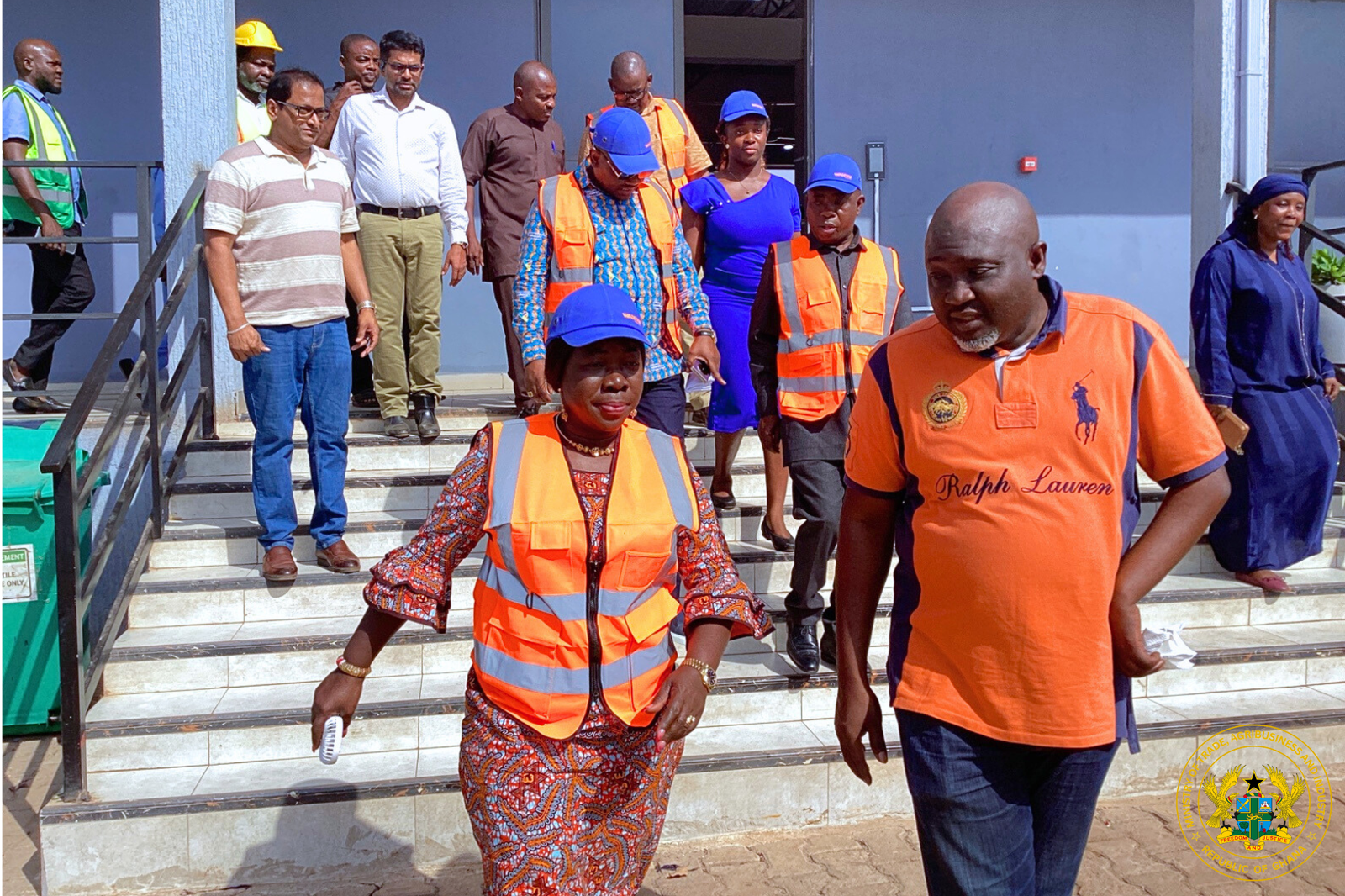
The Minister for Trade, Agribusiness and Industry, Elizabeth Ofosu-Adjare, has reaffirmed the government’s commitment to supporting the private sector to thrive, create decent jobs, and boost local apparel manufacturing across the country.
According to the minister, Ghana remains open and ready for business, and President John Dramani Mahama is fully committed to creating sustainable employment opportunities, particularly for the youth.
She emphasized that the government will continue to implement policies and initiatives that strengthen the private sector as a key driver of economic growth.
Elizabeth Ofosu-Adjare made these remarks during a one-day working visit to Northshore Apparel Ghana Ltd in Savelugu, Northern Region, on Thursday, 12 February 2026.
The minister expressed her delight at the company’s voluntary pre-hire operator training programme, which is currently equipping nearly 2,000 participants with market-ready skills for permanent employment. She commended the initiative as a strong example of private sector partnership in national development.
Accompanied by her deputy minister, Sampson Ahi, the Trade Minister encouraged the trainees to take full advantage of the opportunity, remain committed to their training, and work diligently to help sustain the company’s operations.
She further announced that in 2026, the government will support three additional private garment and textile companies to fully establish their operations.
“I am impressed with the activities here and the infrastructure, which includes an on-site clinic and crèche,” she stated, urging trainees to remain loyal and committed in appreciation of the investment being made in them.
The Chief Executive Officer of Northshore Apparel Ghana Ltd, Nurudeen Mohammed, noted that the company is developing Ghana’s first apparel manufacturing hub designed to deliver ethical, efficient, and globally competitive production for conscious fashion brands.
He explained that the new facility specializes in both knitted and woven garments, including T-shirts, polo shirts, fleece hoodies, and children’s wear, among others.
He described the investment as “a central pillar of a broader regeneration agenda aimed at tackling unemployment in Northern Ghana, reducing internal migration, and boosting trade and export growth.”
Nurudeen Mohammed added that the minister’s visit underscores the government’s commitment to export-led industrialisation, value addition, and green manufacturing.
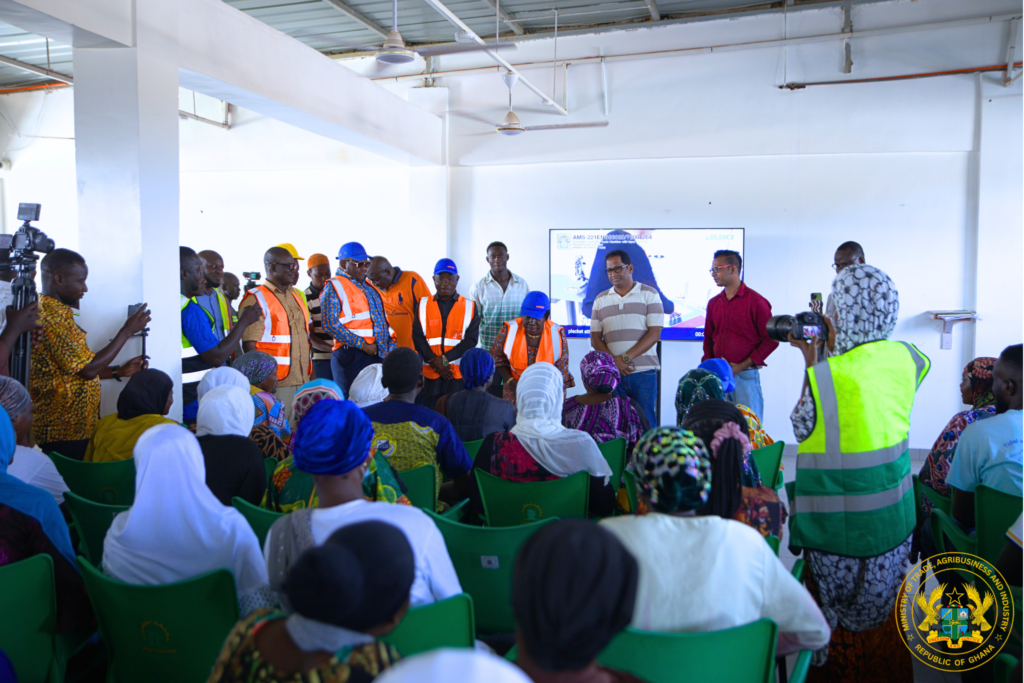
He also acknowledged the support of the company’s partners, including the Ghana Export-Import Bank (GEXIM), and underscored the importance of mission-aligned capital in accelerating industrial transformation and competitiveness.
Phase One of the facility is 95 percent complete and includes 50 fully installed sewing lines, a 50kWp solar power system, and a 4,000-square-metre cutting and design facility.