‘He has not conducted himself well at all’ – Kpebu on Special Prosecutor
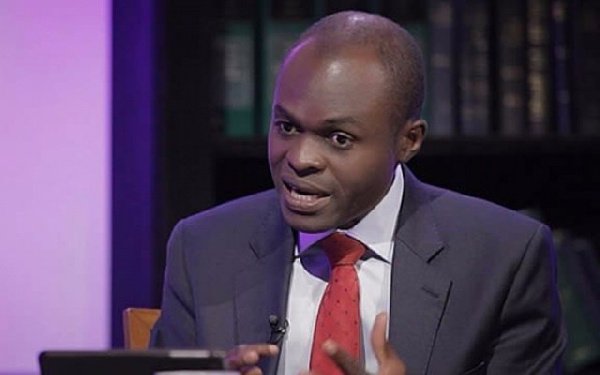
Private legal practitioner Martin Kpebu has called for stronger oversight of the Office of the Special Prosecutor (OSP), arguing that the current occupant of the office needs to be subject to greater institutional supervision.
According to him, the conduct and leadership style of the Special Prosecutor have contributed to controversies surrounding the OSP over the past year and a half and could ultimately undermine public confidence in the institution.
Speaking on Joy News’ PM Express on Monday, Mr Kpebu said the occupant of the office plays a central role in shaping public perceptions of the OSP because the Special Prosecutor serves as the institution’s chief executive and public face.
“Don’t forget that the occupant of the office, as the chief executive, is the number-one ambassador of the organisation. He is the face of the organisation,” he said.
He explained that dissatisfaction with the leadership of the office could easily spill over into perceptions of the institution itself.
“So, sometimes when somebody doesn’t like the activities and style of governance of the office, etc., it may spill over to affect the institution itself,” he added.
Mr Kpebu also criticised the legal framework establishing the OSP, saying it did not provide sufficient safeguards to regulate the conduct of whoever occupies the position.
“To be honest, you feel like, come on, how were we so lacking in foresight in the manner in which we drafted the Act?” he questioned.
“It didn’t show foresight,” he added.
He argued that the framers of the legislation appeared to have assumed that anyone appointed as Special Prosecutor would always conduct themselves appropriately.
“It shows that we just presumed that every occupant of that office will be an angel,” Mr Kpebu said.
According to him, the absence of adequate checks and balances contributed to the tensions surrounding the OSP.
“So we didn’t put in place enough checks and balances to rein the occupant in,” he stated.
His comments follow the Supreme Court’s July 29, 2026 ruling on a constitutional challenge to the prosecutorial powers of the OSP.
The Supreme Court unanimously upheld the constitutionality of the Office of the Special Prosecutor Act, 2017 (Act 959), while affirming that the Attorney-General retains constitutional prosecutorial authority and can discontinue prosecutions initiated by the OSP.
The case was filed by private legal practitioner Noah Ephraem Tetteh Adamtey, who challenged the OSP’s prosecutorial mandate under Article 88 of the 1992 Constitution.
The ruling ultimately preserved the legal foundation of the OSP and the validity of prosecutions undertaken by the office.
For Mr Kpebu, the decision provides an important layer of institutional restraint through greater oversight by the Attorney-General.
“And that’s what the Supreme Court did by now putting the OSP under the Office of the Attorney General, so that the Attorney General supervises the Special Prosecutor,” he said.
He was particularly emphatic about the need for oversight of the current Special Prosecutor.
“It’s this Special Prosecutor specifically who needs that adult supervision,” he said.
“Yeah, he needs that adult supervision. He’s not conducted himself well at all,” Mr Kpebu added.