

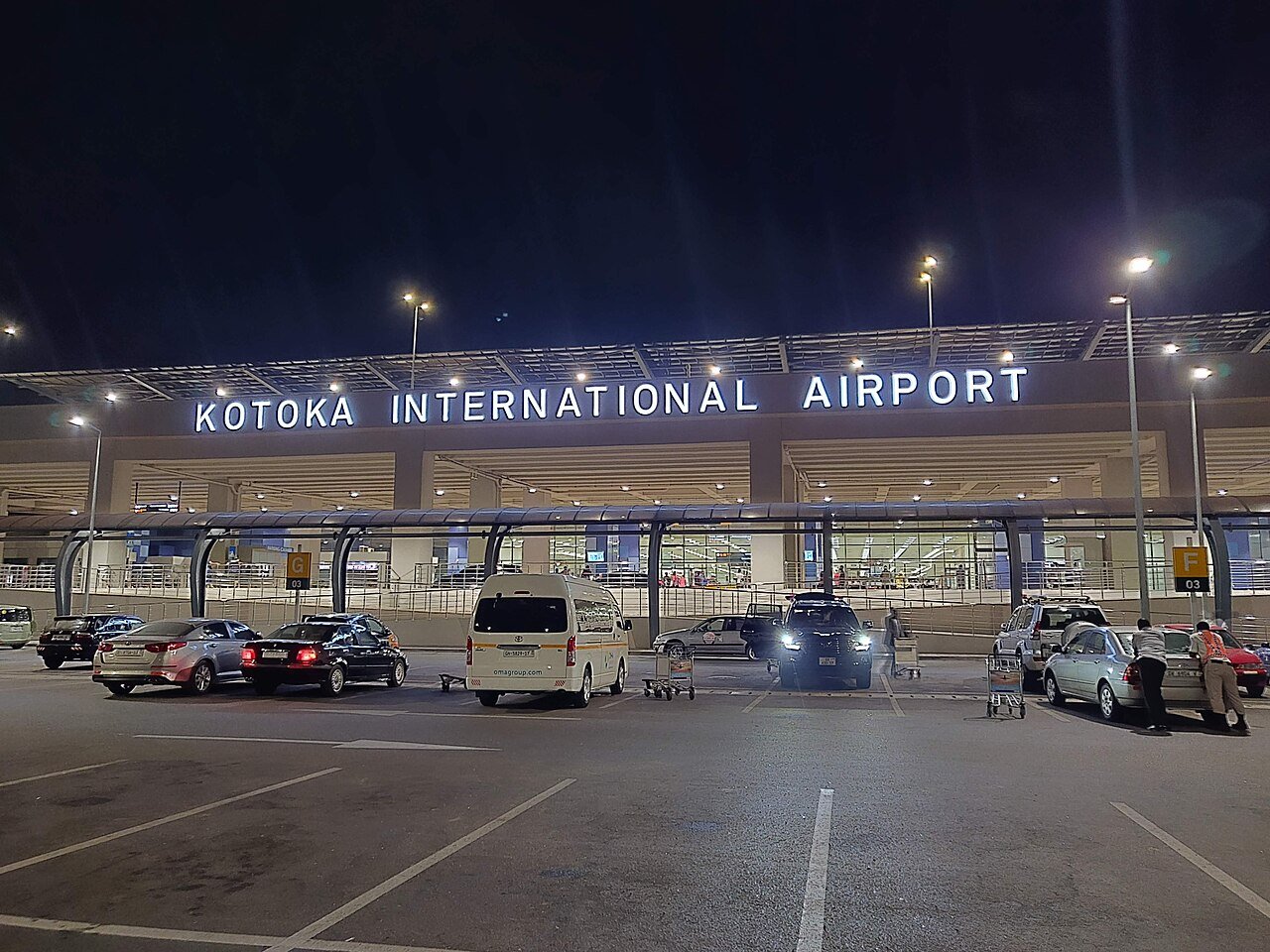
Private legal practitioner and historian Yaw Anokye Frimpong has disclosed that Ghana’s premier international airport, now known as Kotoka International Airport (KIA), was originally earmarked by Osagyefo Dr Kwame Nkrumah to be named after the legendary Queen Mother of Ejisu, Yaa Asantewaa, but the plan was thwarted by opposition from some Ashanti sub-chiefs.
Speaking as a guest on JoyNews’ Upfront programme on Wednesday, February 4, Mr Anokye Frimpong detailed the historical context behind the proposal while contributing to the ongoing national debate on renaming the airport.
According to the historian, the idea emerged during Nkrumah’s tenure as Prime Minister following the attainment of internal self-government in 1951. Nkrumah, he said, envisioned Ghana as the epicentre of Africa’s liberation struggle and recognised the strategic need for a world-class international airport to support that ambition.
“Nkrumah gave us the Ghana Navy and the Ghana Air Force. He met the Gold Coast Army and transformed it. With his pan-African vision of supporting every African country to gain independence, using Ghana as the base, he needed an international airport,” Mr Anokye explained.
He noted that the facility, completed by independence in 1957, was deliberately constructed for global rather than domestic use. The nearby Ambassador Hotel was also built around the same period to accommodate visiting foreign dignitaries, as Ghana lacked suitable high-end accommodation at the time.
When the time came to name the airport, Nkrumah reportedly insisted it should honour a woman, drawing inspiration from one of his key mentors, Dr James Kwegyir Aggrey of Achimota School. Aggrey’s famous dictum—“If you educate a man, you educate an individual; if you educate a woman, you educate a whole nation”—deeply influenced Nkrumah’s thinking on gender and nation-building.
After consulting with Asantehene Otumfuo Osei Agyeman Prempeh II, Nkrumah proposed naming the airport after Yaa Asantewaa, the fearless Ashanti queen who led the War of the Golden Stool in 1900 to resist British attempts to seize the sacred symbol of Ashanti sovereignty.
Mr Anokye emphasised that Nkrumah, a keen student of African history, understood the symbolic power of Yaa Asantewaa’s resistance. Despite the technical defeat of Ashanti forces, the British never captured the Golden Stool, a fact that preserved Ashanti dignity. Naming the airport after her, he believed, would earn Ghana international respect and advance the cause of women’s empowerment.
“The Asantehene was excited about the idea and convened a meeting of Ashanti chiefs to share the proposal,” the historian recounted.
However, the plan met stiff resistance from some sub-chiefs, who framed their opposition in political terms.
“They said, ‘We have a conflict, and we have disassociated ourselves. Kwame Nkrumah is a CPP person. If he has not gotten any female’s name to put on the airport, he should go and look for a CPP woman to name it after. It will not be our royal, Yaa Asantewaa,’” Mr Anokye quoted the chiefs as saying.
Despite appeals from the Asantehene, the dissent persisted, forcing Nkrumah to abandon the proposal. He eventually named the facility Accra International Airport—a neutral designation that deliberately avoided honouring himself or any individual.
“He could have named it Kwame International Airport, but he chose Accra International Airport symbolically to show he was not interested in immortalising his own name,” Mr Anokye added.
The historian’s revelation comes amid renewed public debate following the government’s indication that it intends to rename Kotoka International Airport and possibly revert to or adopt a new name for the facility formerly known as Accra International Airport.
While some Ghanaians argue the change is unnecessary, others maintain that the current name glorifies Lt Gen Emmanuel Kwasi Kotoka, a key figure in the 1966 military coup that overthrew Ghana’s first president and founder.