

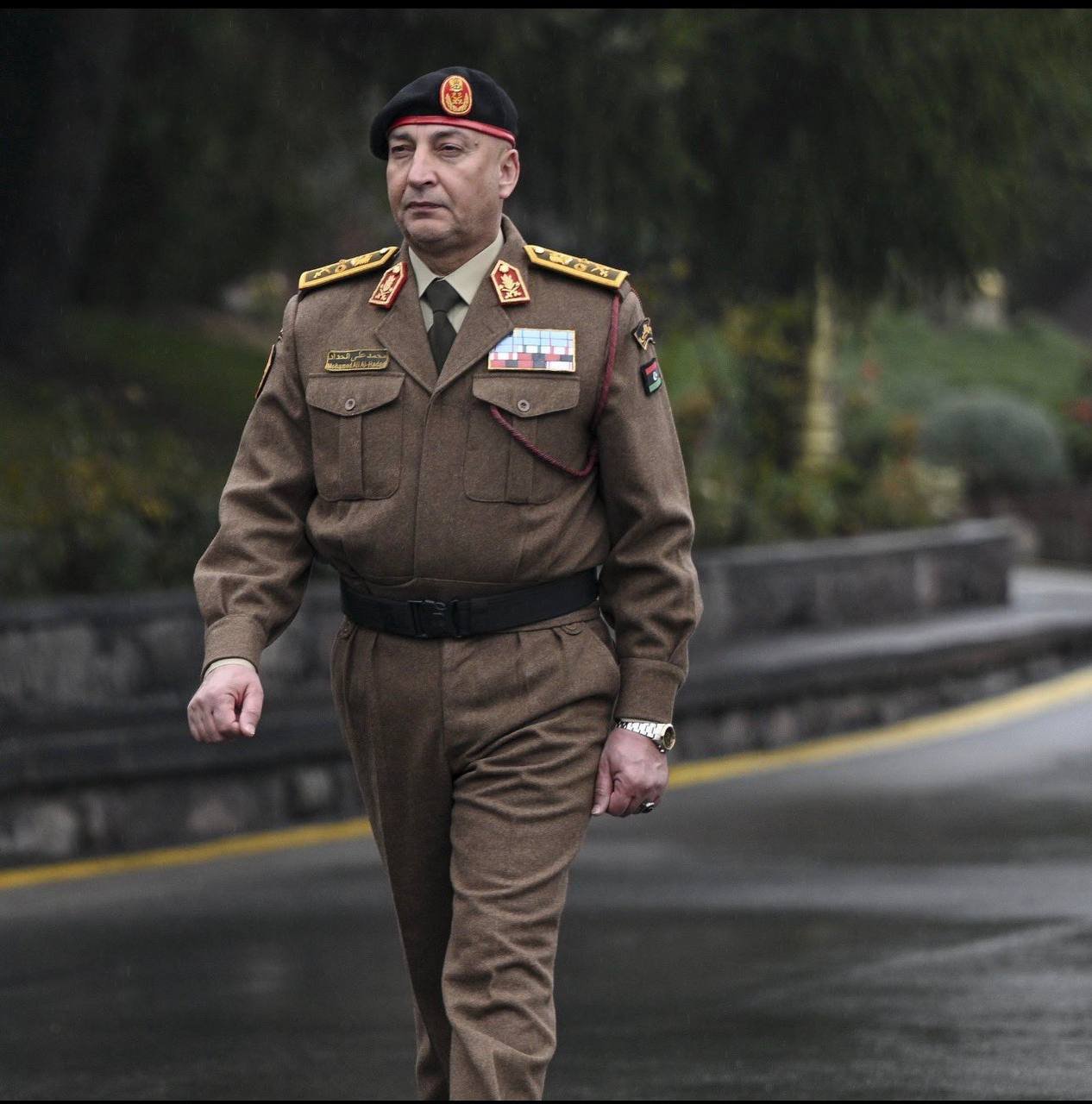
Libya’s Chief of Staff, Lieutenant General Mohammed Ali Ahmed Al-Haddad, and four senior military officials have been confirmed dead following a plane crash shortly after takeoff from Ankara, Turkey, on Tuesday.
According to a Reuters report, the incident occurred as the delegation was returning from an official visit to the Turkish capital, where Al-Haddad had held high-level talks with Turkish defence officials.
In a statement, Libyan Prime Minister Abdulhamid Dbeibah expressed deep sorrow over the tragedy, describing it as a “great loss for the nation, the military institution, and all the people.”
Also killed in the crash were the commander of Libya’s ground forces, Major General Al-Fitouri Ghribel; the director of the Military Manufacturing Authority, Brigadier Mahmoud Al-Qattouwi; an adviser to the Chief of Staff, Mohamed Al-Asawi Diab; and a photographer from the Chief of Staff’s office, Mohamed Omar Ahmed Mahjoub.
Some reports indicate the Dassault Falcon 50 private jet also carried crew members, though the prime minister confirmed five passengers in total, all of whom perished.
Turkish Interior Minister Ali Yerlikaya announced on X that the aircraft took off from Ankara’s Esenboğa Airport at 1710 GMT, en route to Tripoli, but radio contact was lost at 1752 GMT. The plane had requested an emergency landing over the Haymana district before communication ceased.
Wreckage was later located near Kesikkavak village in Ankara’s Haymana district, approximately 74 km south of the capital. Search and rescue teams reached the site, confirming no survivors.
The cause of the crash remains under investigation, with Turkish authorities launching a probe. No immediate indications of foul play have been reported.
Al-Haddad’s visit to Ankara involved meetings with Turkish Defence Minister Yaşar Güler and Chief of General Staff Selçuk Bayraktaroğlu, aimed at strengthening military cooperation.
The crash comes a day after Turkey’s parliament approved a two-year extension of its military deployment mandate in Libya. Turkey, a NATO member, has long supported Libya’s internationally recognised Government of National Unity in Tripoli, providing military training and backing since 2020, including controversial maritime and energy agreements opposed by Egypt and Greece.
Recently, Ankara has pursued a “One Libya” policy, increasing engagement with eastern factions to promote national unity.
The Libyan government has offered condolences to the families of the deceased, praising their dedication and service to the country.