

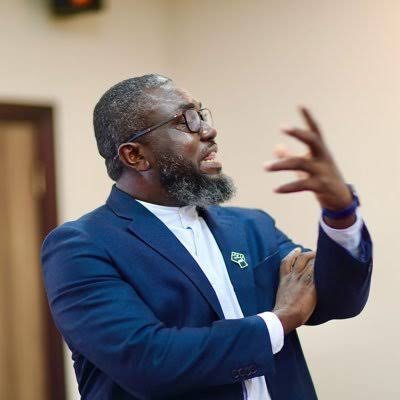
Lawyer and activist Oliver Barker-Vormawor has warned that Ghana’s constitutional reform process cannot be pursued by a single political party, stressing the need for broad stakeholder consensus.
Speaking on Joy News’ PM Express on Tuesday, he said the committee must consider the various position papers and views presented by stakeholders and communicate their concerns and recommendations to the government.
However, Mr Barker-Vormawor, recently appointed Secretary of the Constitution Review Implementation Committee (CRIC), explained that the committee’s role is to offer technical support rather than decide which proposals should ultimately be enacted into law.
“Our brief is clear. It was made clear to us that we are not another post-Prempeh committee tasked with taking policy positions. It’s not a policy body; it’s a technical body supposed to move along what the political process settles,” he said.
“Maybe we’re going to convene conversations among the different stakeholders so that there might be some consensus generated,” he added.
According to him, the constitutional reform process must be driven by continuous dialogue, consensus and compromise, rather than being pushed through by a single political party. He added that the reform agenda should be based on a plan agreed upon by all key stakeholders.
He stressed that the committee would not determine which proposals would ultimately be included in constitutional amendment bills.
“The key decision-making as to what proposals go and end up in the bills is beyond our pay grade. That’s not our decision to make,” he said.
“I mean, we have elected members of Parliament for a reason. We have political parties that seek a mandate for reasons. They are the voices that will direct how our way of work will go. We are essentially clay in their hands.”
Meanwhile, the committee is mandated to review the government’s position paper alongside the report of the Constitution Review Committee, chaired by Professor H. Kwesi Prempeh, and develop a framework for implementing the proposals accepted by the government.
Explaining the committee’s mandate, Mr Barker-Vormawor said its role is primarily to facilitate the reform process, comparing its work to that of the Electoral Commission or a midwife.
“The midwife does not determine the sex of the baby, doesn’t determine the, you know, colour of the baby. You just deliver the process,” he said.
“So, we are delivering what the political process puts in our hands to deliver. We can’t change, you know, one black hair to grey,” he added.