

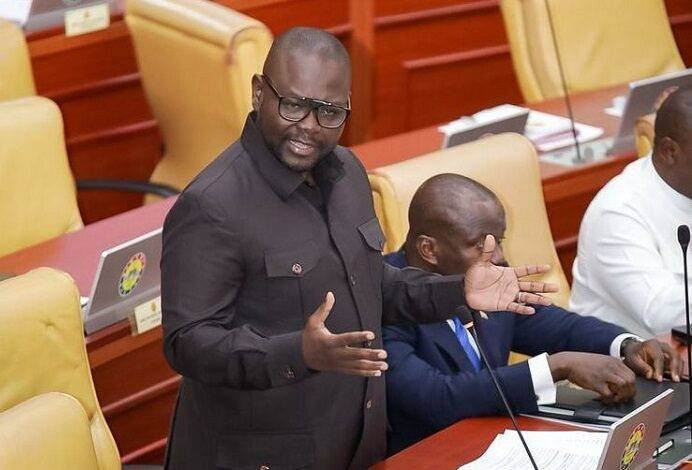
The Ashanti Regional Caucus of the New Patriotic Party (NPP) in Parliament has sharply criticised the government over the decision to downgrade the Suame Interchange Project, questioning the apparent inconsistencies in national funding priorities for road infrastructure.
At a press briefing in Kumasi on Monday, February 6, 2026, the caucus, led by Francis Asenso-Boakye, MP for Bantama and former Minister for Roads and Highways, demanded explanations for why a flagship project designed to ease chronic traffic congestion in Ghana’s second-largest city is being scaled back while funds are reportedly available for other major road works.
“If government could mobilise funds for the Ofankor–Nsawam road and other major projects, why is the Suame Interchange being short-changed?” Hon. Asenso-Boakye queried.
The MPs pointed out that the Suame Interchange was explicitly included in the 2025 Big Push Road Programme, a government initiative aimed at ensuring sustained financing for high-priority infrastructure projects across the country.
They further referenced recent public statements by the Finance Minister indicating that a total of GH¢43 billion has been earmarked for road infrastructure development in the 2026 budget year, questioning why a relatively modest portion of that allocation could not be directed toward completing the Suame Interchange in its original four-tier design.
The caucus accused the government of favouring the award of 64 new road projects through sole sourcing arrangements over the completion of ongoing, high-impact initiatives such as the Suame Interchange.
According to the Ashanti NPP MPs, this approach not only undermines economic efficiency but also jeopardises long-term urban mobility and planning in the Ashanti Region.
They warned that failing to deliver the interchange as originally planned would perpetuate severe traffic gridlock in Kumasi, leading to persistent productivity losses, increased transport costs, higher vehicle maintenance expenses, and reduced economic competitiveness for businesses operating in the city.
“Kumasi deserves infrastructure that meets its scale and significance,” Asenso-Boakye emphasised.
“Short-changing major projects now will cost the city and the nation—far more in the long term.”
The Ashanti Caucus has therefore called on the government to urgently reconsider its funding decisions, restore the full scope and original design of the Suame Interchange, and prioritise allocations in line with Kumasi’s strategic role as Ghana’s second capital and a major national transport and commercial hub.
The Suame Interchange, long anticipated as a transformative solution to one of Kumasi’s most pressing infrastructural challenges, has been a subject of public expectation and political debate for several years.