Government clears $1.4 billion energy sector debt
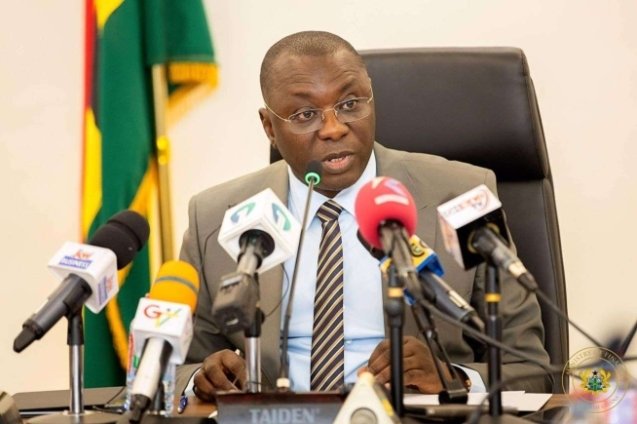
The Ministry of Finance has announced that the government has successfully cleared US$1.47 billion in energy sector debts, marking a significant milestone in restoring financial stability and rebuilding international confidence in Ghana’s economy.
In a statement issued on Monday, January 12, 2026, the Ministry revealed that the John Mahama administration, upon taking office in January 2025, inherited an energy sector teetering on the edge of collapse.
This was primarily due to prolonged non-payments for gas supplied from the Offshore Cape Three Points (OCTP) field, which resulted in the full exhaustion of a US$500 million World Bank Partial Risk Guarantee (PRG) by the previous government.
The PRG, originally set up in 2015, served as a critical mechanism to attract nearly US$8 billion in private investments for the Sankofa Gas Project, ensuring payments to key partners ENI and Vitol in cases of default.
According to the Ministry, the government has now repaid the entire US$597.15 million drawn from the World Bank guarantee, including accrued interest, thereby fully restoring the facility and reinforcing Ghana’s reliability as a partner on the global stage.
Throughout 2025, the administration also settled all pending gas invoices to ENI and Vitol, totaling around US$480 million, bringing the country current on its commitments to the Sankofa project stakeholders.
Furthermore, the government addressed legacy debts to Independent Power Producers (IPPs) by disbursing approximately US$393 million in 2025, following the renegotiation of all IPP contracts to achieve better terms and value for money. Payments were made to various IPPs, including US$120 million to Karpowership Ghana, US$59.4 million to Cenpower Generation, US$54 million to Sunon Asogli, US$42 million to Early Power, US$38 million to Twin City Energy (Amandi), US$30 million each to AKSA Energy and Cenit Energy, US$10.56 million to BXC Company, and US$8.82 million to Meinergy Technology.
The Ministry further noted that engagements with upstream partners, such as Tullow Oil and Jubilee Field operators, have led to an agreed roadmap for settling gas supply payments. These efforts are designed to guarantee consistent electricity production and foster industrial expansion.
As a result of these initiatives, gas production has increased, reducing the nation’s dependence on costly liquid fuels.
The Finance Ministry emphasized that sufficient budgetary allocations have been secured to maintain prompt payments in the future, declaring that “the era of uncontrolled energy sector debt accumulation is over.”