

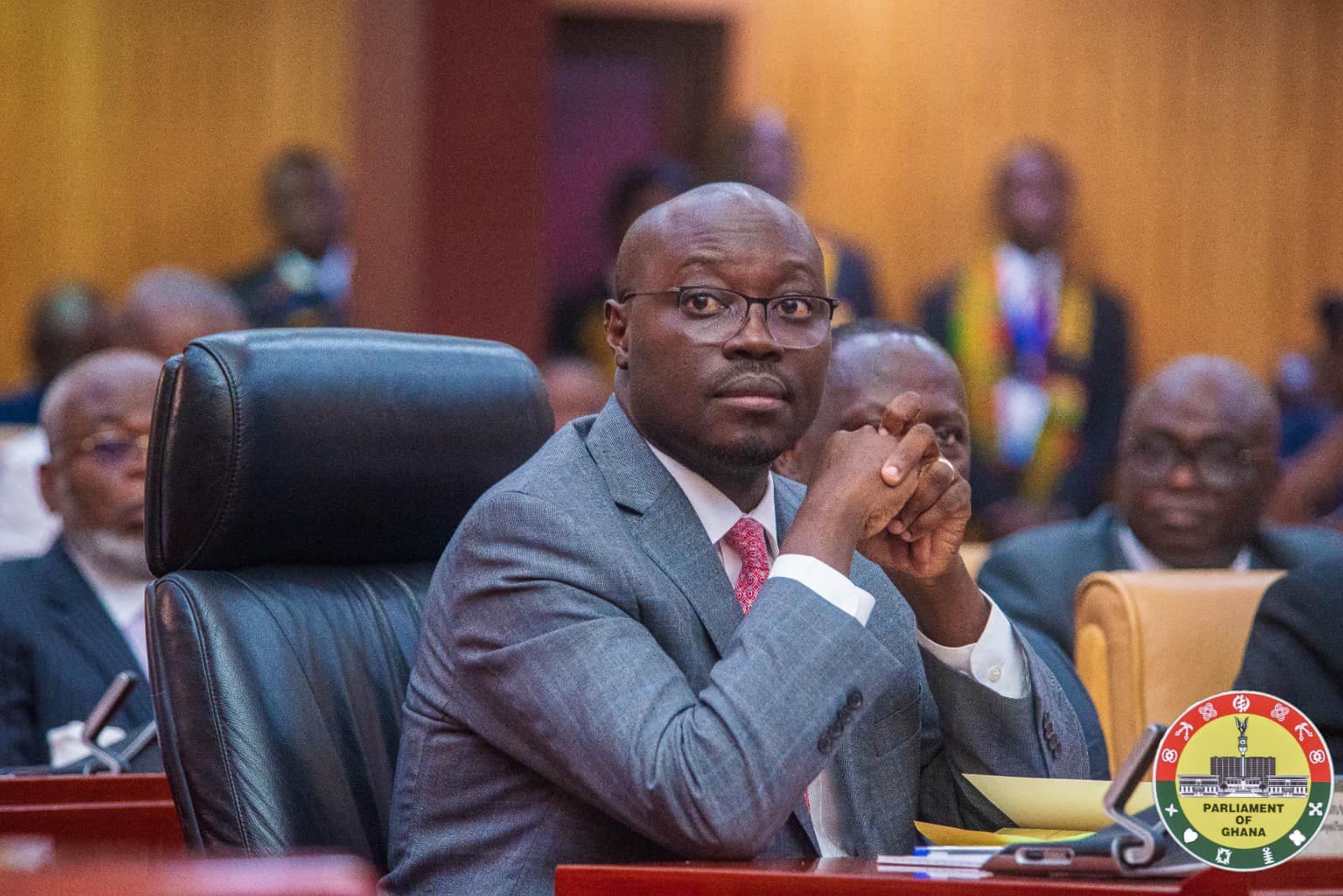
Finance Minister Dr. Cassiel Ato Forson has unveiled the Ghana Accelerated National Reserve Accumulation Policy (GANRAP), a strategic plan aimed at bolstering the country’s international reserves to 15 months of import cover by the end of 2028, describing it as an “economic war-chest” to shield Ghana from future shocks.
Presenting the policy statement in Parliament on Wednesday, Dr. Forson highlighted Ghana’s remarkable macroeconomic recovery in 2025, following the 2022-2023 economic crisis. He noted that real GDP growth averaged 6.1 percent in the first three quarters of 2025, inflation dropped from 23.8 percent in 2024 to 3.8 percent in January 2026, and the cedi appreciated significantly against major currencies, including a 40.7 percent gain against the US Dollar.
“The current Gross International Reserve level is above the traditional reserve benchmark of three months of import cover. However, this is not sufficient to provide adequate self-insurance against disruptive economic shocks,” Dr. Forson stated, emphasizing the need for enhanced resilience amid global uncertainties such as commodity price volatility, geopolitical tensions, and climate risks.
According to the minister, GANRAP, anchored on the Ghana Gold Board Act, 2025 (Act 1140), seeks to leverage Ghana’s gold resources amid historically high global gold prices.
The policy sets intermediate targets: achieving at least 8.6 months of import cover by end-2026, exceeding 11.8 months by end-2027, and reaching the 15-month goal by end-2028.
These milestones will be reviewed annually based on import levels, prices, production, and financing conditions.
To bridge the gap from the current 5.7 months of import cover at the end of 2025, the strategy requires an average annual addition of US$9.5 billion to gross international reserves after accounting for debt service and other outflows. This will be achieved through weekly gold purchases of approximately 3.02 tonnes, projected to generate US$25.28 billion annually at a gold price of US$5,000 per ounce.
Dr. Forson outlined a two-pronged acquisition approach: the Ghana Gold Board will procure a minimum of 2.45 tonnes per week from the Artisanal Small-Scale Mining (ASM) sector, supported by budgetary allocations from the Ministry of Finance.
Additionally, the Minister for Lands and Natural Resources will invoke preemption rights under relevant laws to purchase at least 0.57 tonnes per week from large-scale miners, with the Bank of Ghana acquiring this output.
Key policy measures include establishing an Inter-Agency Committee to ensure compliance from large-scale miners, mandating transactions in cedis at discounted rates, and refining doré gold locally before adding it to reserves. Sales of this gold by the central bank will require prior approval from Cabinet and Parliament.
For the ASM sector, the Ghana Gold Board will secure funding for 3-4 weeks of purchases, assume responsibility for off-take agreements, deploy hedging strategies, and offer price incentives to curb smuggling. Medium-term efforts will focus on formalization, traceability, and establishing LBMA-compliant processing plants.
The policy also includes intensified anti-illegal mining operations by the National Anti-Illegal Mining Operations Secretariat (NAIMOS), a nationwide water-body cleansing campaign by the Ghana Armed Forces, and support for land reclamation.
Beyond gold, the GANRAP incorporates reforms to boost foreign exchange inflows, such as enhancing non-traditional exports like cashew and shea, cocoa sector recovery, oil palm development for self-sufficiency, remittance mobilization, and new oil field developments.
The Gas-to-Power Transformation Policy is expected to save approximately US$3 billion annually in energy sector FX outflows by constructing a 1,200MW power plant, a second gas processing plant, and revamping upstream petroleum investments.
In a cost-benefit analysis, Dr. Forson contrasted the high costs of past reserve-building methods—such as swaps, sale-and-buy-backs, and Eurobond borrowings totaling US$21.7 billion from 2017-2024 at an interest cost of US$3.84 billion plus GH¢7.3 billion—with the more efficient Ghana Gold Board model.
In 2025, the Board generated US$10 billion in foreign exchange at a cost of just US$214 million, compared to a hypothetical borrowing cost of US$800 million at 8 percent yields.
The benefits, he added, include significant reserve accumulation, historic cedi appreciation, reduced inflation, improved debt sustainability, and savings on external obligations, delivering relief to households through lower fuel and food prices, and reduced cost of living.
“This policy is informed by lessons from the 1997 Asian Financial Crisis, where affected countries built robust reserves to weather future storms,” Dr. Forson said, noting how major gold producers like China, Russia, and Australia are similarly capitalizing on high prices.
The Minister stressed that maintaining fiscal discipline, including a primary surplus, is crucial to prevent reserve depletion.