High Court decision to strip OSP of prosecutorial powers wrong – Minority

The Minority in Parliament has criticised a High Court ruling that directs the Attorney-General to take over all criminal prosecutions being handled by the Office of the Special Prosecutor (OSP), describing the decision as legally flawed and erroneous.
The Minority caucus argues that Article 88(4) of the 1992 Constitution grants the OSP a one-time authorisation to undertake criminal prosecutions, rendering further approval from the Attorney-General unnecessary for each case.
Their reaction comes after the High Court in Accra, on Wednesday, April 15, ordered the Attorney-General to assume immediate control of all ongoing prosecutions initiated by the OSP, pending formal authorisation. The court also declared all such prosecutions null and void, effectively halting several high-profile cases.
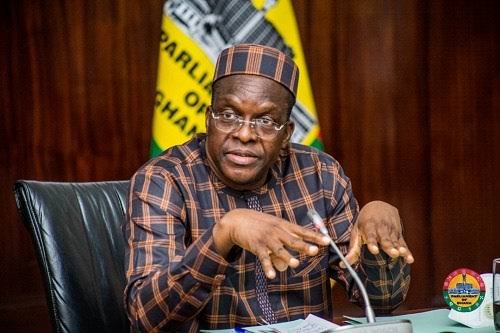
Speaking to Citi News on Thursday, April 16, the Legal Counsel to the Minority caucus and Member of Parliament for Suame, John Darko, described the ruling as “a complete mistake.”
“If anybody interprets Section 4 of the OSP Act to mean that any time we want to bring a prosecution, a criminal suit against anybody, we need to go to the Attorney-General’s office for clearance, you’ll be mistaken,” he said.
“Because then there was no need to set up the office for it to be controlled by the executive. If the person needs the AG’s authorisation at every turn, every day to bring cases, then it’s just like another appendage of the executive and comes under the control of the executive.”
John Darko further slammed the court’s decision to nullify all ongoing cases, arguing that the judge lacked the authority to do so.
“The judge, again, was wrong. He cannot declare all the cases as null and void. He has no such power. The only court that has that power would be the Supreme Court,” he asserted.
The Minority MP called on the Attorney-General to demonstrate commitment to the fight against corruption by promptly authorising the OSP to continue handling its cases independently.
According to the Minority, the Attorney-General’s swift move to take over the prosecutions raises serious questions about the government’s genuine commitment to tackling corruption.
John Darko also described the government’s legal stance against the OSP as troubling and inconsistent with efforts to strengthen anti-corruption institutions in the country.