

Lawyers for the accused persons in the ongoing Sky Train trial have argued that the failure of the ambitious urban rail project was occasioned by the COVID-19 pandemic and not by any criminal conduct on the part of their clients.
In their submissions of no case filed before the High Court, the defence maintained that the US$2 million at the centre of the prosecution’s case was fully accounted for and was neither diverted nor lost.
According to the defence, the funds were invested as equity into a Special Purpose Vehicle (SPV), Ai Skytrain Consortium Holdings Limited, in accordance with an investment structure that anticipated recovery of the amount upon the achievement of “financial close.”
“The funds were not spent by A1 or A2, not diverted, and not lost,” the filing stated, adding that details of the arrangement are contained in page 20 of Exhibit F, an Investment Committee Memorandum tendered by Prosecution Witness Three (PW3) during his evidence-in-chief.
The defence further argued that shortly after the concession agreement for the project was signed in November 2019, the outbreak of the COVID-19 pandemic and the ensuing global economic uncertainty effectively halted financing for mass transit infrastructure projects worldwide.
According to the lawyers, the pandemic, which led to lockdowns and disruptions in international financial markets, prevented the project from reaching “financial close” — the stage at which the investment was expected to be recovered.
“Financial close could not be reached due to a major external event that intervened after the investment was made and feasibility study was underway. No investor in any country was immune to this and the pandemic was not foreseeable,” the filing noted.
The defence also disputed suggestions that the US$2 million was meant for the physical construction of the light railway system.
They argued that Exhibit F expressly stated that the money was intended to acquire an equity stake in the SPV and that no evidence had been presented by the prosecution to demonstrate that the amount was to be used to build the rail infrastructure.
The lawyers contended that the prosecution had failed to establish that the money was misappropriated or improperly applied and therefore urged the court to uphold their submission of no case.
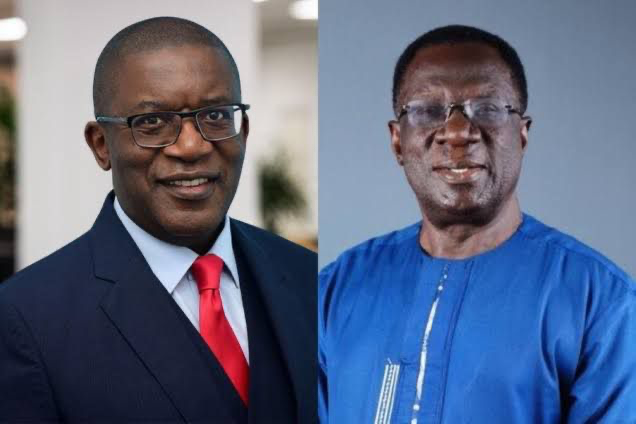
The Sky Train case involves former Chief Executive Officer of the Ghana Infrastructure Investment Fund (GIIF), Solomon Asamoah, and former Board Chairman Professor Christopher Ameyaw-Akumfi, who are standing trial over the disbursement of US$2 million towards the proposed Accra Sky Train project.
According to the state, the acccused persons caused US$2 million belonging to GIIF and the Republic of Ghana to be transferred to Africa Investor Holdings Limited/Ai SkyTrain Consortium Holdings without the requisite board approval and due diligence, thereby causing financial loss and dissipating public funds.
Both accused persons have pleaded not guilty to the charges.
The prosecution closed its case after calling witnesses, paving the way for the accused persons to file submissions of no case, with the court expected to determine whether sufficient evidence has been adduced to require them to open their defence.