

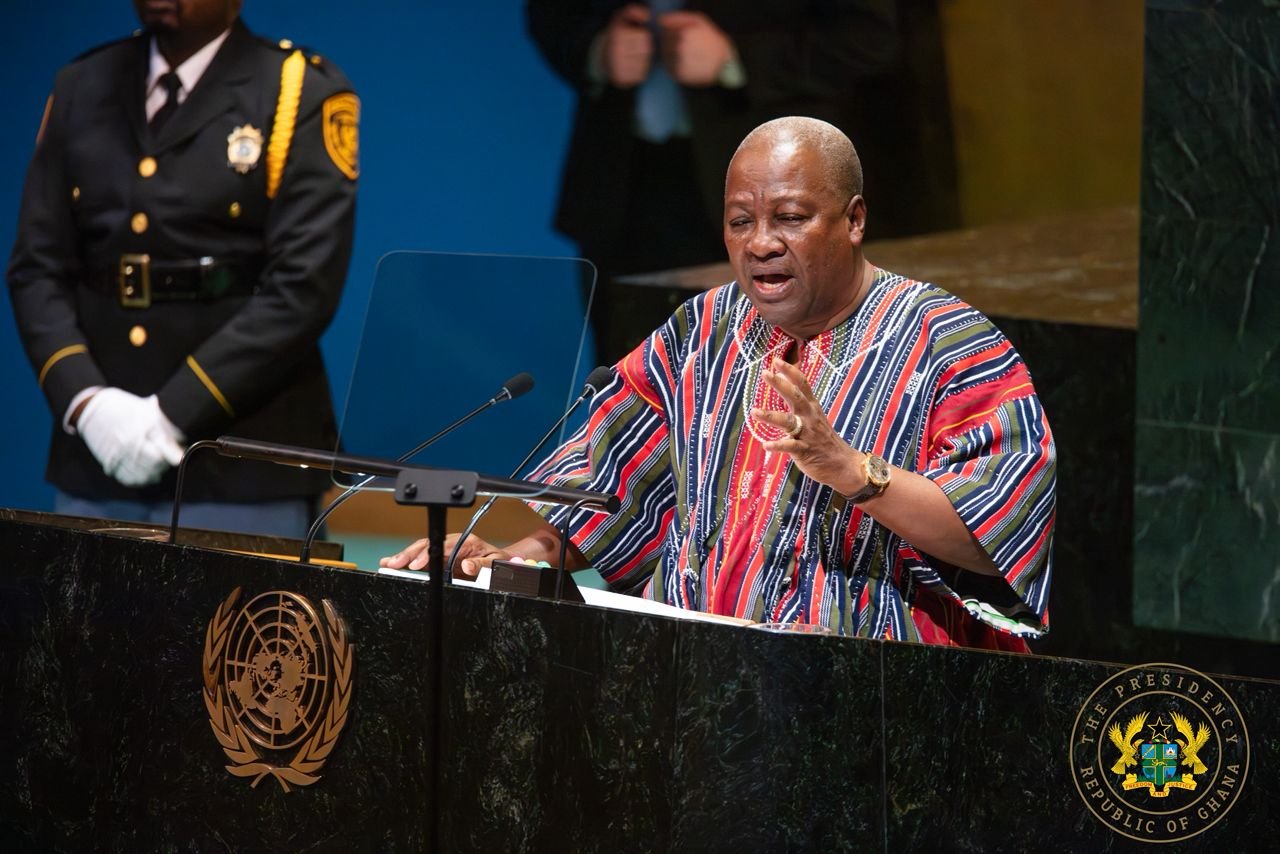
President John Dramani Mahama on Wednesday jokingly advised Ghanaians to stop eating heavy meals like banku at night as part of efforts to promote healthier lifestyles and combat non-communicable diseases (NCDs).
The president made the light-hearted remark during the official launch of the government’s flagship Free Primary Healthcare Initiative in Dodowa, Greater Accra Region.
Speaking at the event, President Mahama linked the rising cases of NCDs to modern dietary habits and sedentary lifestyles, urging citizens to adopt better eating patterns.
“Stop eating banku at night,” he said amidst laughter from the audience, adding that dinner should ideally be taken earlier in the evening.
“If you are the kind of person who likes eating heavy foods, you are not physically active, you are sitting at one place and yet when they give you your fufu or banku, you say it’s too small. You want a big bowl of fufu and you want to eat it everyday. Sometimes you eat it at night before you go and sleep. Please by 7PM, eat your dinner and don’t eat again. If you are hungry just pick some cup of tea or something. Don’t eat any heavy food,” he advised.
The president further cautioned against pressuring spouses to prepare late-night meals after long workdays.
“You come from work in the evening, your wife is tired but you force her to come and get you banku at 10PM, why?” he quizzed.
President Mahama drew a contrast between past and present generations, noting that earlier generations could afford heavy night meals because they engaged in physically demanding activities like farming.
“Our fathers used to eat banku and co in the night but they were physically active, they used to go to the farm and they expended energy. Now we don’t do any physical activity. You wake up in the morning, eat breakfast, drive to work, sit behind the desk 8 am to 5pm, drive back home and when you come home you ask for your banku. What physical activity did you do to deserve banku?” he jokingly questioned.
The comments formed part of the president’s call for lifestyle changes to reduce the burden of non-communicable diseases. The Free Primary Healthcare Initiative, which was officially launched on Wednesday, emphasises preventive care and public education as key strategies.
The programme is expected to begin its first phase by targeting 150 underserved districts nationwide, as part of government efforts to achieve universal health coverage.