

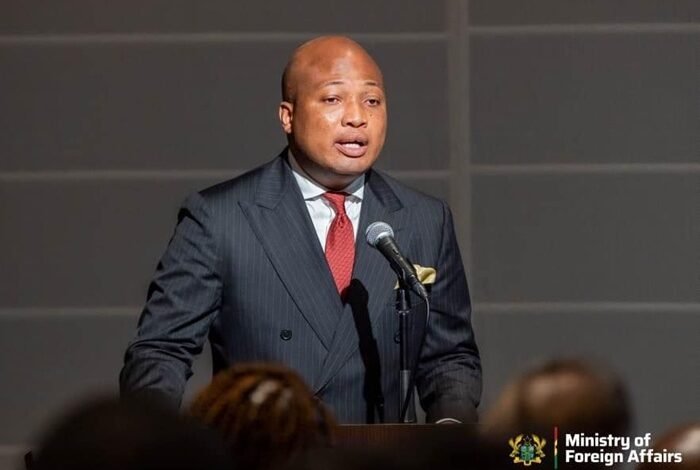
The Minister for Foreign Affairs, Samuel Okudzeto Ablakwa, has called the adoption of the United Nations resolution on the transatlantic slave trade an “emphatic victory for justice,” indicating that it restores the dignity and humanity of Africans and people of African descent.
Speaking in the United States after the United Nations approved the resolution on Wednesday, March 25, Mr Ablakwa explained that the decision represents a defining moment in the global quest for truth and justice.
“This is an emphatic victory for justice and our ancestors. Africans and all people of African descent are today honoured that our humanity and our dignity have been restored,” he said.
According to Mr Ablakwa, the resolution secured massive support from 123 member states and formally recognises the trafficking and enslavement of Africans as the gravest crime against humanity.
He explained that the outcome goes beyond the passage of a document, describing it as a moral statement by the international community.
“With the adoption of this resolution, we have not simply passed a text; we have affirmed a truth. We have chosen remembrance over silence, dignity over erasure, and shared humanity over division,” he stated.
Ablakwa said the adoption of this text is not an arrival at the destination, but a major step in our ongoing journey, adding that Ghana and its partners remain committed to continued engagement with all countries.
The resolution marks a turning point in how the world confronts the legacy of slavery, insisting that its scale and enduring consequences demand recognition at the highest level.
He further emphasised that the resolution will pave the way for sustained global engagement on reparatory justice, describing it as a broader framework for healing, restoration, and partnership.
“It is not about reopening old wounds, but ensuring they are neither forgotten nor denied,” he added.
“The work of justice does not end with remembrance. We cannot change history, but we can change how we remember it and in doing so, we can change what we carry forward.”
“Today, the world has chosen to remember with purpose, justice, and equity. Let that purpose guide us toward a future that is more just, more inclusive, and more profoundly human,” he said.
The minister urged countries to pursue inclusive and good-faith dialogue on reparations and to confront the structural inequalities rooted in slavery, calling on member states to act.